What does chanterelle mean?
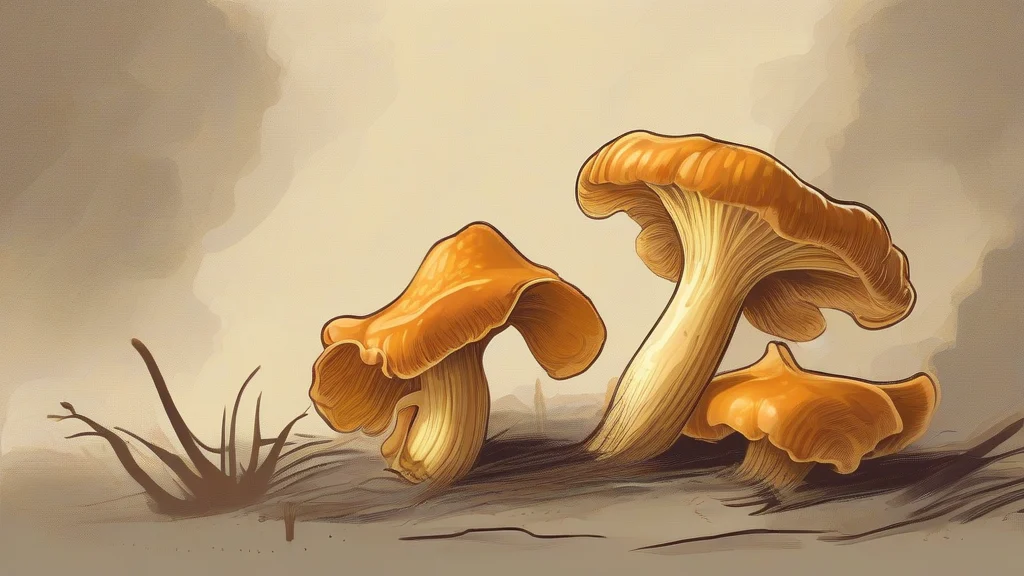
A chanterelle is a highly regarded edible wild mushroom, best known through the species Cantharellus cibarius, which displays a wavy, golden-yellow cap shaped rather like a small trumpet or funnel. Unlike many familiar mushrooms, chanterelles have blunt, forking ridges on their underside instead of true gills, a feature that helps distinguish them from lookalikes such as the false chanterelle. They are prized in European and North American cooking for their firm texture and a distinctive aroma often compared to apricots, appearing in dishes ranging from simple butter sautés to refined sauces and risottos. Because chanterelles have resisted reliable commercial cultivation, they are gathered by foragers in forests, typically in summer and autumn, which adds to their reputation and price. The word comes from French, ultimately tracing back through Latin and Greek roots referring to a drinking vessel—a nod to the mushroom's cup-like form—and the term is used almost entirely in gastronomic and mycological contexts.
nounA chanterelle is an edible wild mushroom with a yellow to orange, trumpet-shaped cap and ridges rather than true gills beneath, prized by cooks for its fruity aroma and rich, peppery flavor.
- An edible wild mushroom of the genus Cantharellus, especially Cantharellus cibarius, having a golden-yellow, funnel-shaped cap and forked ridges instead of gills.
- By extension, any of several similar fungi marketed or cooked as chanterelles, including some species once classified in the same genus.
"The chef folded fresh chanterelles into the risotto at the last moment."
"Foragers filled their baskets with chanterelles after the autumn rains."
"She sautéed the chanterelles in butter with a little thyme and garlic."
The standard plural; it is the more common form in both culinary writing and everyday speech, since the mushrooms are typically discussed in quantities.
"The recipe calls for a pound of chanterelles, cleaned and torn into pieces."
Despite looking like a flower and smelling faintly of apricots, the chanterelle is a fungus that resists cultivation—every one you eat was picked in the wild.
Reviewed by Deb Chak, Editor. AI-assisted content curated by RJS Tech Solutions LLP.
Etymology of chanterelle
The word chanterelle entered English from French in the 18th century, borrowed from 'chanterelle,' the French name for this mushroom. The French term is a diminutive formed from 'champignon' tradition naming via Late Latin 'cantharellus,' itself derived from Latin 'cantharus,' meaning a drinking cup or goblet, which in turn came from Greek 'kantharos.' The name reflects the mushroom's deep, cup- or goblet-shaped cap. The same Greek root also gives us 'cantharides,' a term for blister beetles, though the two senses developed independently.
How chanterelle is actually used
Used almost exclusively in culinary and foraging contexts; the plural 'chanterelles' is more common than the singular in everyday writing. The word carries a connotation of gourmet quality and is often paired with terms like 'wild' or 'foraged.' In British usage the French borrowing 'girolle' appears frequently alongside it.
Easily confused with chanterelle
The false chanterelle (Hygrophoropsis aurantiaca) resembles the edible chanterelle in color but has true gills rather than blunt ridges and lacks its distinctive apricot-like scent.