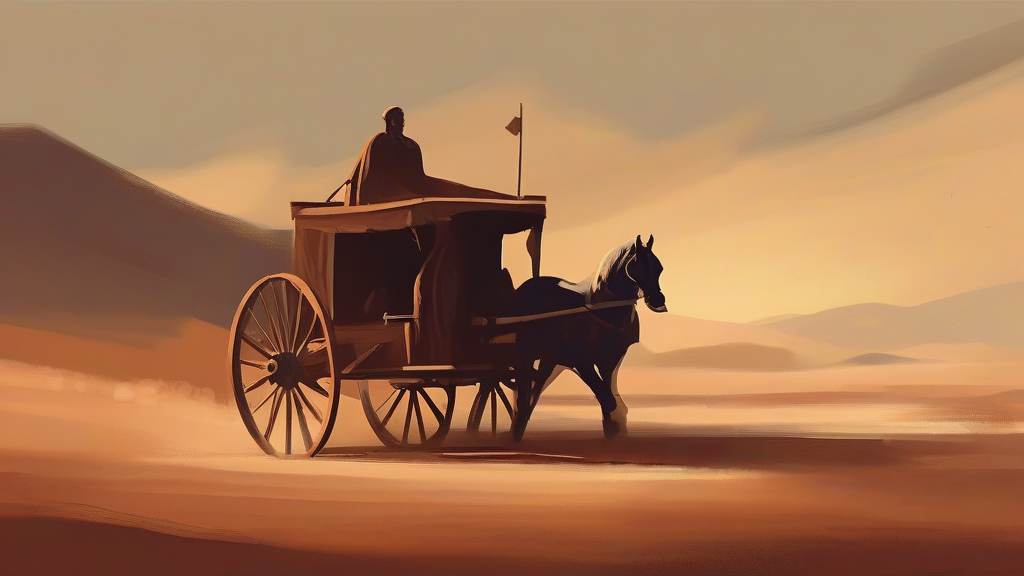
What does charioted mean?
"Charioted" is the past tense of the rare English verb "chariot," meaning to convey someone in a chariot — the light, horse-drawn, two-wheeled vehicle of the ancient world — or, figuratively, to sweep them along with speed and splendor as though riding in one. The word belongs almost entirely to literary, historical, or poetic registers rather than everyday speech; modern writers reach for it when they want to evoke antiquity, triumph, or dramatic motion, as in describing a hero charioted into battle or a victor charioted through celebrating crowds. Its figurative sense carries connotations of grandeur, momentum, and spectacle. Because the noun "chariot" dominates the word's usage, many readers encounter the verb only occasionally, giving it a distinctive, slightly elevated flavor when it does appear.
Conveyed in a chariot; transported on or as if on a chariot.
"The emperor was charioted through the forum to thunderous applause."
Almost exclusively literary or historical in register.
Carried or swept along swiftly and impressively, as if riding in a chariot.
"News of the discovery charioted across the continent within days."
Figurative use is rare and found mainly in poetic prose.
The verb 'chariot' is so rare that most people have never heard it used — yet it once described how emperors and triumphant generals made their grandest entrances.
Reviewed by Deb Chak, Editor. AI-assisted content curated by RJS Tech Solutions LLP.
Etymology of charioted
The word derives from "chariot," which entered English in the 14th century from Old French "charriote," ultimately rooted in Latin "carrus" or "carrum," meaning a wheeled vehicle — the same Latin source that gives us "car," "cart," "cargo," and "carry." The verb form arose later by derivation from the noun, following the common English pattern of turning nouns for vehicles into verbs of transport. Its cognates across Romance languages include French "char" and Italian "carro."
Related word forms
How charioted is actually used
Rare and chiefly literary or historical; the verb form is far less common than the noun 'chariot'. In modern writing it appears mostly in figurative or poetic contexts.
Easily confused with charioted
'Charioted' means conveyed in or as if in a chariot, while 'chaperoned' means accompanied and supervised, typically of young or unmarried people.