What does charlock mean?
Charlock is the common British name for Sinapis arvensis, a fast-growing annual plant of the mustard family that flourishes on cultivated land across Europe, Asia, and North Africa and has spread widely elsewhere. Also known as wild mustard or field mustard, it bears clusters of bright yellow, four-petaled flowers and coarsely bristly leaves, and it can grow a metre or more tall. For centuries charlock was one of the most notorious weeds of cornfields, competing fiercely with cereal crops, though its young shoots and seeds have occasionally been used as a pungent foodstuff much like true mustard. In North American usage the plant is usually referred to as wild or field mustard, so 'charlock' tends to signal a British, rural, or literary register. The word evokes traditional countryside imagery and remains familiar through farming literature and nature writing.
nounA common weed of farmland, Sinapis arvensis, a member of the mustard family with bright yellow four-petaled flowers, also known as wild mustard or field mustard.
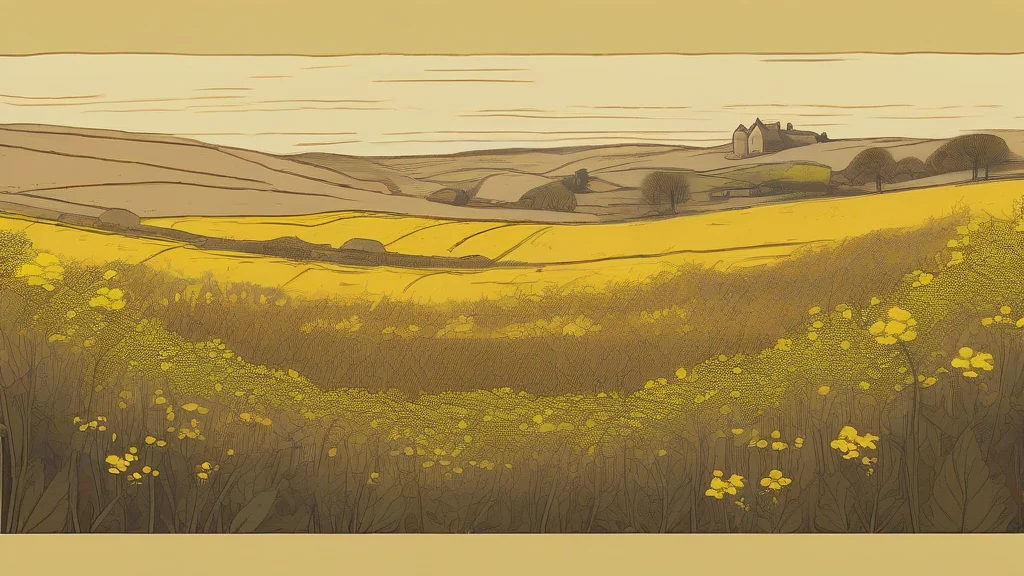
- The plant Sinapis arvensis (wild mustard), a widespread arable weed with bright yellow flowers.
"The fallow field was ablaze with charlock by early summer."
"The fallow field was ablaze with charlock by early summer."
"Farmers once struggled to keep charlock out of their cereal crops."
Usually uncountable when describing masses of the weed ('the field was full of charlock'); the plural is used only when counting individual plants, which is rare.
"She pulled out the few charlocks growing along the hedge."
Before modern herbicides, charlock could turn entire wheat fields yellow overnight — farmers cursed it as one of the most troublesome weeds in Britain.
Reviewed by Deb Chak, Editor. AI-assisted content curated by RJS Tech Solutions LLP.
Etymology of charlock
Charlock descends from Old English, recorded in early medieval glossaries as a name for this field weed, and has been in continuous use in English for well over a thousand years. Its first element may relate to Old English words for a ploughman or churl-like labourer, suggesting a 'peasant's plant', though the precise derivation is debated. The word belongs to the native Germanic stock of English vocabulary rather than to Latin or French borrowings, which is why its cognates are chiefly other Germanic dialect forms naming the same weed.
How charlock is actually used
Chiefly British in everyday use; in North America the same plant is more often called wild mustard or field mustard. The word carries a rustic, agricultural flavour and appears mostly in botanical, farming, and literary contexts rather than casual speech.
Easily confused with charlock
Hemlock is a highly poisonous plant of the carrot family, whereas charlock is an edible mustard-family weed; the two names merely sound alike.