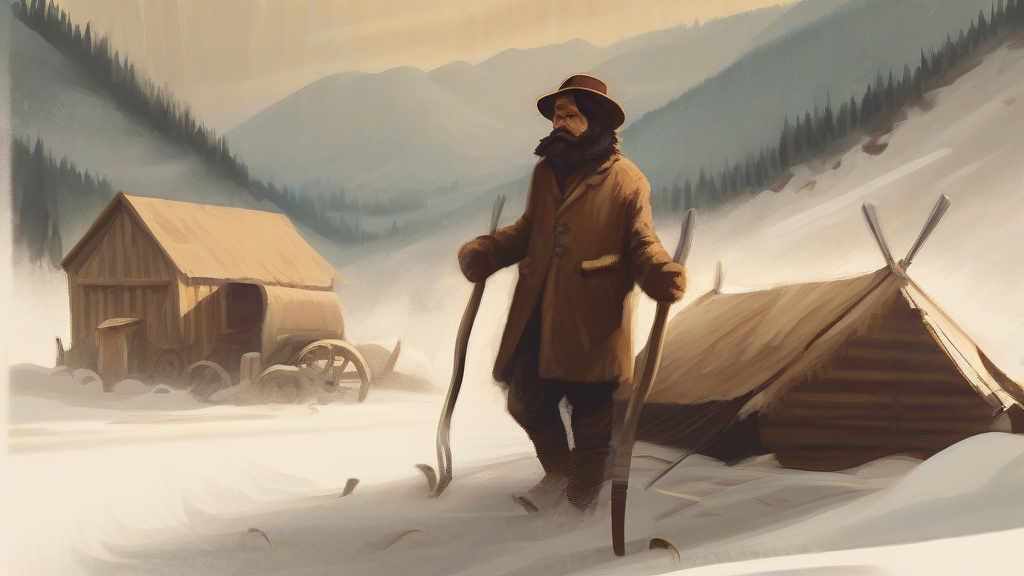
What does cheechako mean?
A cheechako is a newcomer to Alaska or Canada's Yukon — someone freshly arrived from the south who has not yet learned to cope with the region's brutal winters, rugged terrain, and distinctive way of life. The word entered English during the late nineteenth-century gold rushes, borrowed from Chinook Jargon, the pidgin trade language of the Pacific Northwest, where it combined elements meaning roughly 'just arrived.' In the Klondike, calling someone a cheechako was more than description: it marked an unproven outsider whose standing would be earned only by surviving a full northern year, after which he might be called a 'sourdough.' Today the word survives as an affectionate regionalism, used with gentle teasing rather than contempt. It remains a vivid reminder of how frontier communities created their own vocabulary of belonging.
nounA newcomer to Alaska or the Yukon; a greenhorn who has not yet adapted to northern conditions.
- A newcomer to Alaska or the Yukon, especially one unfamiliar with northern life and conditions.
"After his first winter in Fairbanks, the young teacher was no longer a cheechako."
"The trail guide could spot a cheechako instantly — he was still wearing city boots in three feet of snow."
"Every sourdough in camp had once been a cheechako, so no one mocked the newcomer's mistakes."
Regular plural; occasionally capitalized in older frontier writing but normally lowercase today.
"The steamboat dock was crowded each summer with fresh cheechakos bound for the diggings."
In the Klondike, your status was measured in winters: survive one and you graduate from 'cheechako' to full-fledged northerner.
Reviewed by Deb Chak, Editor. AI-assisted content curated by RJS Tech Solutions LLP.
Etymology of cheechako
Cheechako comes from Chinook Jargon, a pidgin trade language spoken along the Pacific Northwest coast. It combines 'chee,' meaning new or just, with 'chako,' meaning come — literally 'just come' or 'newly arrived.' The word spread into widespread English use during the Klondike Gold Rush of the 1890s, when tens of thousands of stampeders poured into the Yukon and Alaska.
Related word forms
How cheechako is actually used
Informal and regional, used affectionately rather than pejoratively. The term is strongly associated with Alaska and the Yukon, dating from the Klondike Gold Rush era.
Easily confused with cheechako
A sourdough is the opposite of a cheechako — a seasoned Alaskan or Yukoner who has endured the north for years.