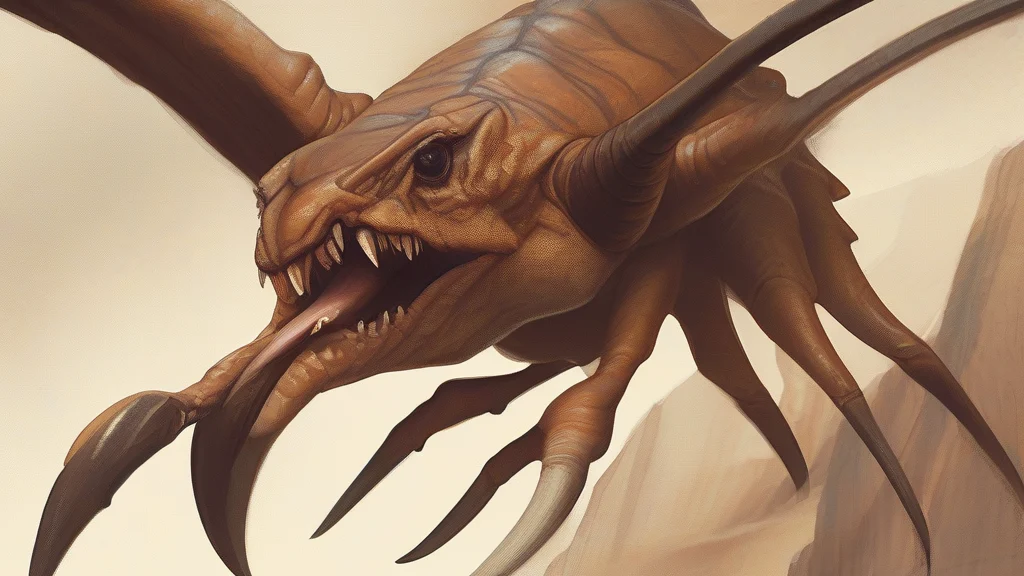
What does cheliferous mean?
Cheliferous is a technical adjective used in zoology to describe animals — chiefly crustaceans, arachnids, and certain insects — that possess claws or pincer-like appendages. A crab's crushing front legs, a scorpion's grasping pedipalps, and a lobster's powerful claws all make their owners cheliferous. The word derives from Latin chela, itself borrowed from Greek khēlē meaning 'claw' or 'talon,' combined with the suffix -ferous, meaning 'bearing' or 'producing.' Because it belongs to formal scientific register rather than everyday English, it appears mainly in taxonomic descriptions, comparative anatomy texts, and specialist literature on arthropod morphology. Its value lies in precision: where 'clawed' might be vague or colloquial, cheliferous states unambiguously that the creature bears true pincers, making it a useful term for anyone reading or writing about the anatomy of armed and grasping limbs in the animal kingdom.
adjectiveBearing or possessing a claw or pincer-like appendage; in zoology, having limbs modified into claws or forceps.
- Having or bearing claws or pincer-like appendages, especially as applied to the limbs of crustaceans, arachnids, and other arthropods.
"The scorpion is the classic cheliferous arachnid, its stout pincers adapted for seizing prey."
"Crayfish are cheliferous crustaceans, wielding their enlarged first pair of legs both defensively and to crush food."
"In many cheliferous arthropods, the pincers serve as versatile tools for grooming, courtship, and combat."
The word for 'carrying pincers' comes from the same Greek root as the name of the tiny book scorpion genus Chelifer — nature literally named the animal after its claws.
Reviewed by Deb Chak, Editor. AI-assisted content curated by RJS Tech Solutions LLP.
Etymology of cheliferous
Cheliferous combines Latin chela ('claw'), which Latin borrowed from Greek khēlē meaning 'claw, talon, or hoof,' with the Latin adjectival suffix -ferous ('bearing, carrying'). The same Greek root underlies related scientific terms such as chelate, chelicera, and the genus name Chelifer for the pseudoscorpions. The word arose within post-classical scientific Latin and entered English through zoological literature of the modern era, remaining a specialist descriptive term ever since.
How cheliferous is actually used
A technical term confined almost entirely to zoological and entomological writing; it would sound out of place in everyday speech. It carries no emotional connotation — it is purely descriptive.
Easily confused with cheliferous
Cheliferous means 'bearing a claw,' describing an animal that has pincers, while cheliform means 'shaped like a claw,' describing something that resembles a claw in form.