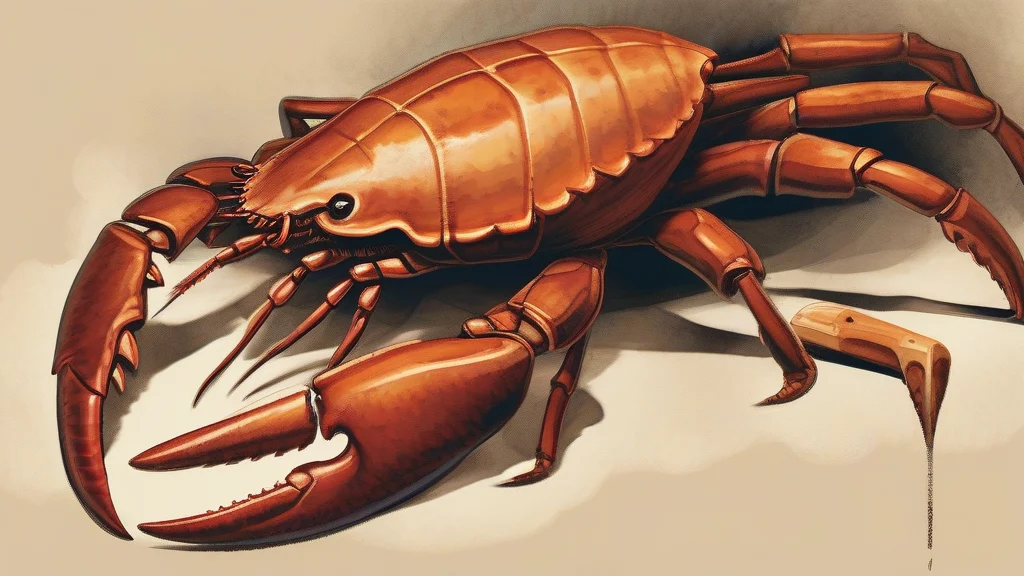
What does chela mean?
Chela has two quite distinct meanings in English, arising from separate origins. In zoology, a chela is a pincer-shaped claw, particularly the swollen, grasping tip of certain limbs in crabs, lobsters, scorpions, and other arthropods. The word derives from Greek khēlē ('claw') and appears largely in scientific contexts, where its plural is chelae. Biologists use it when describing feeding, defence, and display behaviours — for example, the fiddler crab's conspicuously enlarged chela. Separately, in English writing about South Asian religions, a chela is a disciple or personal follower of a guru, a borrowing from Hindi. Because these senses are unrelated in both form and history, context almost always makes the intended meaning clear: natural-history prose signals the first sense, while spiritual or cultural writing signals the second. The zoological sense is the more widely encountered today.
A pincer-like claw of a crustacean or arachnid, especially the enlarged distal segment of a limb.
"The lobster's powerful chela can exert enough force to crack open shellfish."
Technical term in zoology; plural 'chelae'.
A disciple or follower of a guru or religious teacher in South Asian traditions.
"The aged chela had served his master faithfully for forty years."
Borrowed from Hindi; found mainly in literature about Indian religions.
Applies to the claw sense only, which follows Latin declension; the disciple sense is typically used unchanged.
"Both chelae of the crayfish were regrown after moulting."
The same word that names a crab's crushing pincer also names a guru's devoted follower — and they come from entirely unrelated roots.
Reviewed by Deb Chak, Editor. AI-assisted content curated by RJS Tech Solutions LLP.
Etymology of chela
The zoological 'chela' comes from Latin chela, adopted from Greek khēlē, meaning 'claw' or 'talon'; it entered scientific English in the 17th century and shares its Greek root with terms like 'chelicera' and 'chelicerate', applied to arthropods whose mouthparts are modified claws. The religious sense is an independent borrowing from Hindi, where it means 'disciple', though the deeper etymology of the Hindi word is uncertain.
Related word forms
How chela is actually used
In zoology the word is technical, used chiefly by biologists; the plural is 'chelae' (/ˈkiːliː/). The 'disciple' sense is borrowed into English from Hindi and is mainly encountered in writing about Indian religions; it is sometimes pronounced differently (with an initial 'ch' sound).
Easily confused with chela
A 'cella' is the inner chamber of a classical temple, whereas a 'chela' is a pincer-like claw or, in Indian usage, a disciple.