What does chelonian mean?
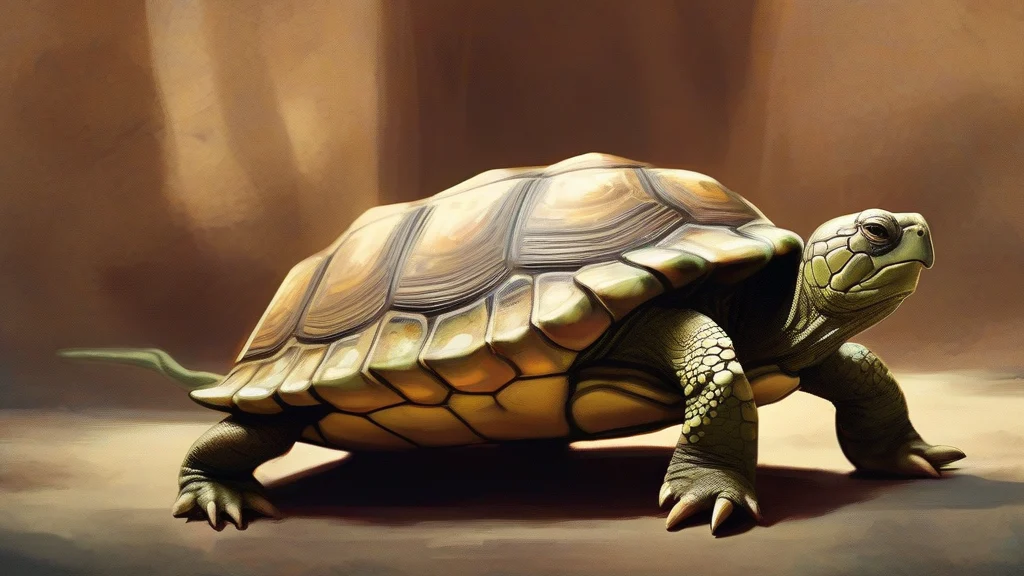
Chelonian is a formal term for any reptile belonging to the order Chelonia (Testudines) — the group that includes turtles, tortoises, and terrapins. These animals are distinguished by a bony or cartilaginous shell that encases their body, fused to the spine and ribs. Although ordinary English speakers usually say 'turtle', 'tortoise', or 'terrapin' depending on the animal's habitat and their regional dialect, 'chelonian' serves as the precise scientific and collective label when habitat distinctions do not matter, as in conservation reports, palaeontology, and comparative anatomy. It also functions as an adjective meaning 'relating to these reptiles', as in 'chelonian evolution'. The word derives from Greek khelōnē, meaning tortoise. Its connotations are scholarly rather than colloquial: using it signals technical precision. For anyone writing about marine biology, wildlife conservation, or the remarkable 200-million-year history of these shelled survivors, chelonian offers accuracy and elegance in a single term.
A reptile of the order Chelonia (Testudines); a turtle, tortoise, or terrapin, enclosed in a protective bony shell.
"Marine biologists recorded several endangered chelonians nesting along the shore."
Used chiefly in scientific, conservation, and formal contexts where a habitat-neutral term is needed.
Relating to or characteristic of turtles, tortoises, and terrapins.
"Her doctoral thesis examined chelonian locomotion and shell morphology."
Almost exclusively found in zoological and academic writing.
Standard regular plural. Used both for multiple individuals and generically for members of the group.
"The sanctuary cares for injured chelonians from across the region."
Despite looking nothing like them, turtles are more closely related to birds and crocodiles than to most other reptiles — and 'chelonian' is the scientific umbrella that covers every one of them.
Reviewed by Deb Chak, Editor. AI-assisted content curated by RJS Tech Solutions LLP.
Etymology of chelonian
Chelonian derives from the Greek khelōnē (χελώνη), meaning 'tortoise', combined with the Latin-derived suffix '-an'. It entered English in the early 19th century as zoologists sought a collective term covering turtles, tortoises, and terrapins without distinguishing by habitat. The order name Chelonia shares the same Greek root, and the adjective form developed alongside the noun in scientific usage.
How chelonian is actually used
Formal and largely scientific register; everyday speech favours 'turtle', 'tortoise', or 'terrapin' depending on region and habitat. In American English 'turtle' broadly covers all chelonians, while British English reserves 'tortoise' for land-dwelling species. As an adjective ('chelonian biology'), it appears mainly in zoological literature.
Easily confused with chelonian
A chameleon is a lizard known for changing colour, whereas a chelonian is a shelled reptile such as a turtle or tortoise; the words merely resemble each other in sound.