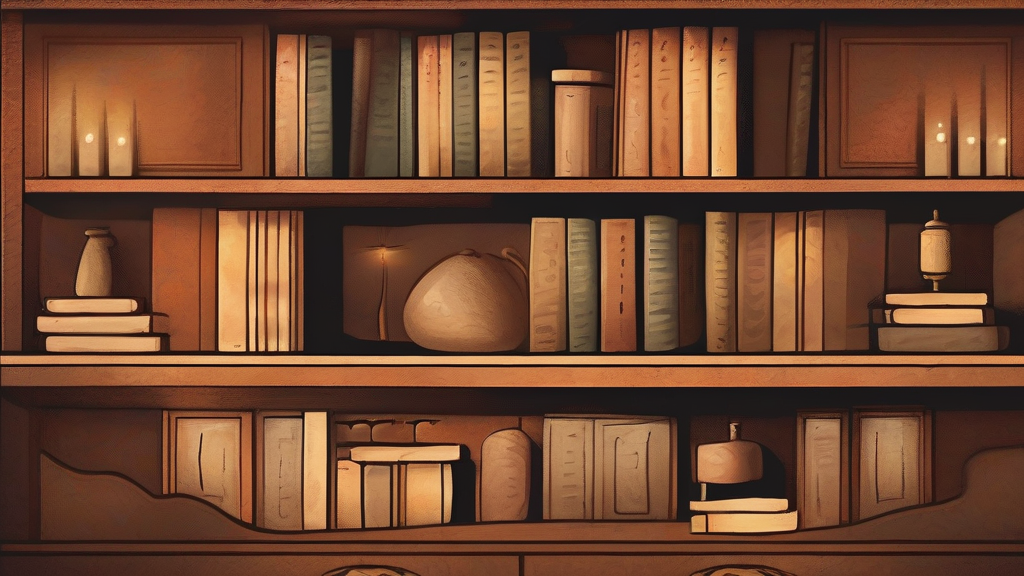
What does chiffonnier mean?
A chiffonnier is a tall, slender chest of drawers, usually standing on short legs and frequently crowned with a mirror, designed for storing clothing and personal items. The word comes from the French 'chiffon', meaning rag or scrap, and entered English in the late eighteenth century alongside the fashion for elegant French-style furniture. Today the term belongs mostly to the vocabulary of antiques dealers, auction houses, and interior designers, giving any description a refined, period flavour: one might speak of a mahogany Victorian chiffonnier or a Louis XVI-style chiffonnier in a bedroom suite. A less common American sense denotes a dining-room sideboard or serving cabinet. The spelling varies between 'chiffonnier' and the simpler 'chiffonier', and the word is easily confused with 'chiffon', the sheer fabric, though the two share the same French ancestor. Its near relatives include the highboy, tallboy, and bureau.
A tall, narrow chest of drawers, typically on legs and often surmounted by a mirror, used for storing clothes.
"An Edwardian chiffonnier stood beside the dressing table."
Also spelled chiffonier; primarily encountered in antique and interior-design contexts.
(Chiefly US) A sideboard or low cabinet, sometimes fitted with drawers and doors, used in a dining room for serving and storage.
"The butler laid out the dessert service on the chiffonnier."
Regular plural; the double-n spelling takes -s directly.
"The hotel suite was furnished with matching mahogany chiffonniers."
Despite sounding like something made of gauzy fabric, a chiffonnier is solid furniture — its name literally descends from the French word for 'rag'.
Reviewed by Deb Chak, Editor. AI-assisted content curated by RJS Tech Solutions LLP.
Etymology of chiffonnier
Chiffonnier derives from French, where it meant a dealer in or gatherer of rags ('chiffons'), and was applied to a tall chest of drawers — perhaps because such furniture held odds and ends or because rag-pickers stored their finds in similar cases. The term passed into English in the late eighteenth century during the vogue for French furniture styles. It shares its root with 'chiffon', the delicate fabric whose name likewise comes from the French word for rag.
How chiffonnier is actually used
The spelling 'chiffonier' is at least as common as 'chiffonnier', and both are accepted. The word has a formal, antique-trade register: it appears mainly in furniture catalogues, auction descriptions, interior-design writing, and historical fiction rather than everyday speech. In American usage the second sense (a dining-room sideboard) is somewhat more current than in British English.
Easily confused with chiffonnier
Chiffonier is simply an alternative spelling of the same word for a chest of drawers, whereas chiffon refers to a sheer lightweight fabric.
A chifforobe is a combination piece of furniture uniting a chest of drawers with a wardrobe section for hanging clothes, while a chiffonnier is only a chest of drawers.