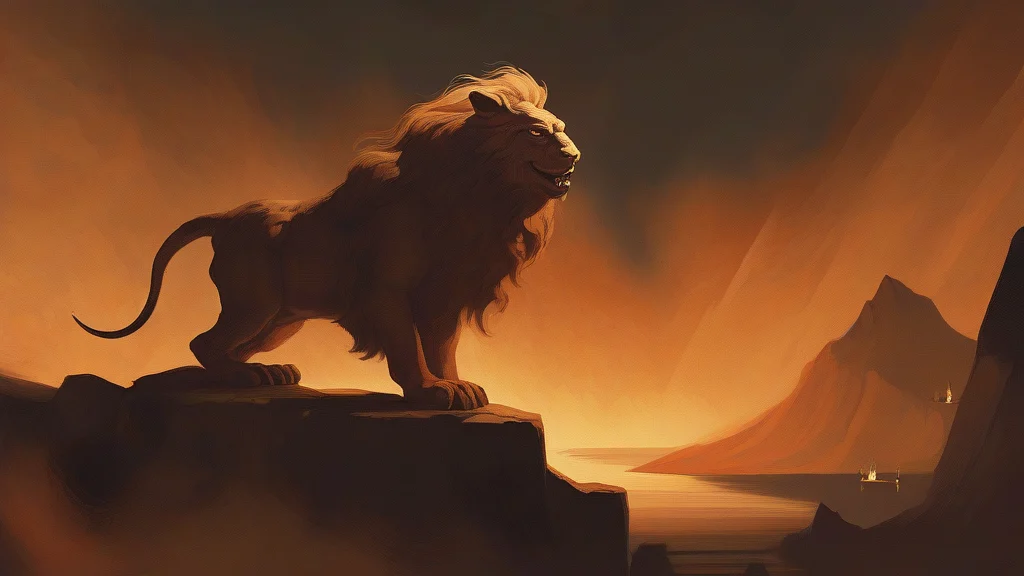
What does chimaera mean?
A chimaera is something illusory and unattainable — a hope, ambition, or fear that exists only in the mind rather than in reality. The word descends from Greek mythology, where the Chimera was a terrifying fire-breathing creature combining a lion's head, a goat's body, and a serpent's tail; because such a beast could never exist, the name came to signify any fanciful impossibility. Today 'chimaera' carries this figurative sense in literary and formal writing, as when a political vision or get-rich scheme is dismissed as a mere chimaera. In science the term has taken on precise technical meanings: biologists use it for an organism containing cells from genetically distinct individuals, and zoologists apply it to a group of bizarre deep-sea fish related to sharks, known informally as ghost sharks. Whether describing an impossible dream, a genetic mosaic, or a strange fish of the ocean depths, the word always evokes the strange fusion of unlike things.
An illusion, fantasy, or wildly improbable idea; something hoped for or feared that cannot actually exist.
"The philosopher dismissed immortality as a chimaera pursued by fools."
Formal or literary register; often preceded by 'mere' or 'pure' to emphasize emptiness.
In Greek mythology, a fire-breathing female monster with a lion's head, a goat's body, and a serpent's tail, killed by the hero Bellerophon.
"Bellerophon rode Pegasus into battle against the Chimaera."
In biology, an organism composed of cells derived from two or more genetically distinct zygotes or individuals.
"The transplant recipient became a natural chimaera, carrying cells from the donor organ throughout her body."
Technical usage in genetics, embryology, and medicine.
Any deep-sea marine fish of the order Chimaeriformes, cartilaginous fishes related to sharks and rays, also called ghost sharks or ratfish.
"The submersible filmed a pale chimaera gliding over the abyssal plain."
Regular plural; used for multiple illusions, organisms, or fish. The mythological monster is usually singular.
"The report exposed the chimaeras that had justified the failed venture."
The ancient Greeks invented a monster made of lion, goat, and snake — and we still use its name today for every impossible dream.
Reviewed by Deb Chak, Editor. AI-assisted content curated by RJS Tech Solutions LLP.
Etymology of chimaera
'Chimaera' comes from Latin 'chimaera', borrowed from Greek 'khimaira', the name of the mythological fire-breathing hybrid monster slain by Bellerophon. The Greek word possibly derives from 'kheimar' or relates to 'kheimon' (winter), though this connection is uncertain. English adopted the word in the late Middle Ages, first in the mythological sense, and the figurative sense of an impossible fantasy developed soon after; the biological sense arose much later, in the twentieth century. The adjective forms 'chimeric' and 'chimerical' derive directly from the same noun.
Related word forms
How chimaera is actually used
The spellings 'chimera' and 'chimaera' are both accepted, with 'chimera' more common in American English and 'chimaera' frequent in British English. The figurative sense (an illusion) is formal or literary in register. The biological sense is technical.
Easily confused with chimaera
A camera is a device for taking photographs, while a chimaera is an impossible fantasy or mythological hybrid monster.