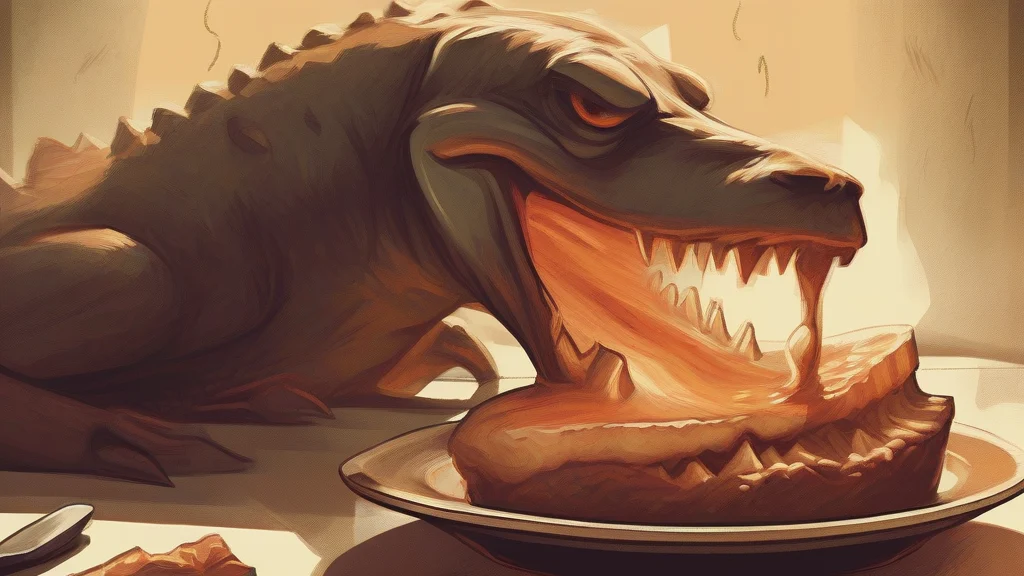
What does chomping mean?
"Chomping" is the present participle of the informal English verb "chomp," meaning to chew or bite something with vigorous, often noisy energy. The word evokes a distinctly audible kind of eating — someone chomping on gum, celery, or a cigar is making their consumption conspicuously known. Beyond literal eating, "chomp" survives most prominently in the idiom "chomping at the bit," which describes restless eagerness to get started on something; the image comes from horses that bite down impatiently on the metal bit of their bridle. The word emerged as a regional American variant of the older verb "champ" in the seventeenth century and has since largely displaced it in everyday speech, though "champing" persists among traditionalists. Informal but widely understood across the English-speaking world, "chomping" adds color and sound to descriptions of eating and eagerness alike.
Present participle of "chomp": to chew or bite something noisily and vigorously.
"The dog lay under the table, chomping happily on its bone."
Informal register; strongly associated with audible, enthusiastic chewing.
A single vigorous, audible bite or the act of such chewing.
"He took a big chomp out of the apple."
Used informally for individual bites or instances of chewing.
"With a few quick chomps, the sandwich was gone."
The phrase you almost certainly know as "chomping at the bit" was originally "champing" — the version purists insist on, even though hardly anyone says it anymore.
Reviewed by Deb Chak, Editor. AI-assisted content curated by RJS Tech Solutions LLP.
Etymology of chomping
"Chomp" first appeared in the seventeenth century as a dialectal American variant of the older verb "champ," meaning to chew or bite repeatedly. Both words likely arose as imitative formations echoing the sound of heavy chewing. The noun "chomp" for the act itself followed naturally, and the variant eventually overtook "champ" in general use except within the traditional form of the idiom "at the bit."
Related word forms
How chomping is actually used
"Chomp" is informal in tone and common in both British and American English, though it originated as an American dialectal variant of the older "champ." It carries a vividly noisy connotation — chomping suggests loud, energetic chewing rather than delicate eating.
Easily confused with chomping
"Champing" is the older form from which "chomp" arose as a dialectal variant; both are correct, but traditionalists prefer "champing at the bit" while everyday usage overwhelmingly favors "chomping."