
What does chondroblast mean?
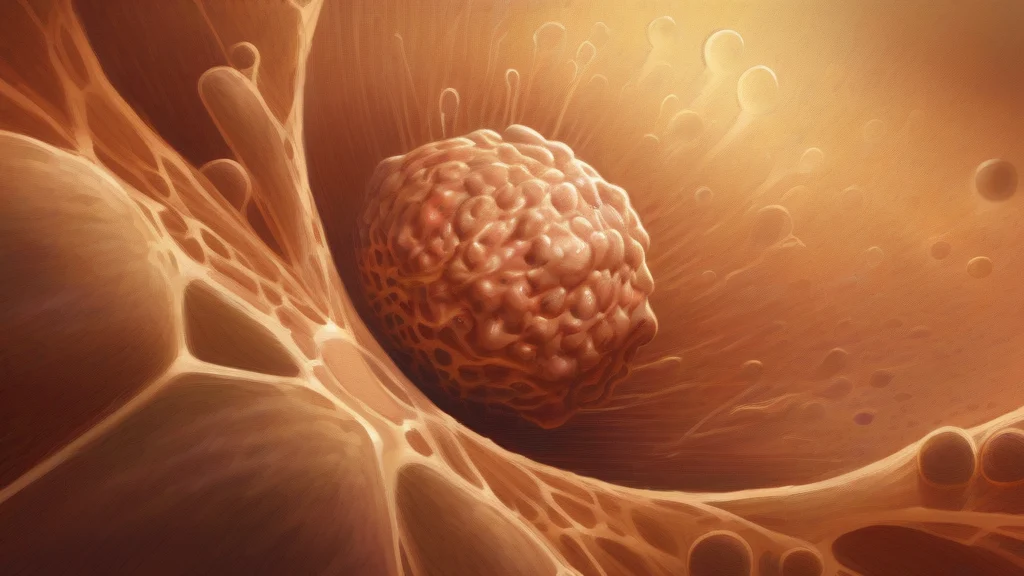
A chondroblast is an immature cartilage cell responsible for producing the extracellular matrix that makes up cartilage tissue. Found chiefly at sites of active cartilage formation — such as embryonic development, the growth plates of long bones, and areas of cartilage repair — chondroblasts secrete collagen fibers and other matrix components around themselves. Once fully enclosed within this matrix, they are considered mature and take on the name chondrocytes, which maintain cartilage throughout life. The word combines the Greek root 'chondros', meaning cartilage or gristle, with the suffix '-blast', denoting a formative or germinal cell. Because cartilage heals poorly compared with bone, understanding how chondroblasts behave is important in regenerative medicine and orthopedics. The term appears almost exclusively in scientific and medical contexts, making it unfamiliar to general readers but valuable for anyone studying anatomy, biology, or sports-related injuries.
nounA cell that gives rise to cartilage by secreting the matrix of cartilage tissue; it matures into a chondrocyte once embedded in that matrix.
- An immature cell that produces and secretes the extracellular matrix of cartilage, differentiating into a chondrocyte.
"During endochondral ossification, chondroblasts lay down the cartilaginous template that is later replaced by bone."
"The researchers isolated chondroblasts from the growing edge of the rib to study cartilage repair."
"In the growth plate, chondroblasts proliferate rapidly before maturing into chondrocytes."
Regular plural formed by adding -s; standard in all varieties of English.
"Chondroblasts migrate into the damaged area but contribute little to lasting repair."
Your bones were built on a scaffolding made by chondroblasts — as an embryo, you were essentially cartilage first.
Reviewed by Deb Chak, Editor. AI-assisted content curated by RJS Tech Solutions LLP.
Etymology of chondroblast
The term derives from the ancient Greek noun 'chondros', meaning grain, gristle, or cartilage, joined to the combining form '-blast' (from the Greek 'blastos', a bud or sprout), which biologists use for immature, formative cells such as osteoblasts and myoblasts. It entered English scientific vocabulary in the late nineteenth and early twentieth centuries alongside the broader family of 'blast' terms used in cytology and embryology. Cognates sharing the 'chondros-' root include chondrocyte, chondroitin, chondroma, and hypochondriac.
How chondroblast is actually used
Strictly a technical term of histology, developmental biology, and medicine; rarely used outside scientific writing. Some sources use 'chondroblast' loosely for any young cartilage cell, but careful usage reserves it for the actively secreting precursor stage.
Easily confused with chondroblast
A chondrocyte is the mature cartilage cell embedded in the matrix it has produced, whereas a chondroblast is the immature, actively matrix-secreting stage.
An osteoblast forms bone rather than cartilage, though both are 'blast' cells derived from mesenchyme.