What does ciabatta mean?
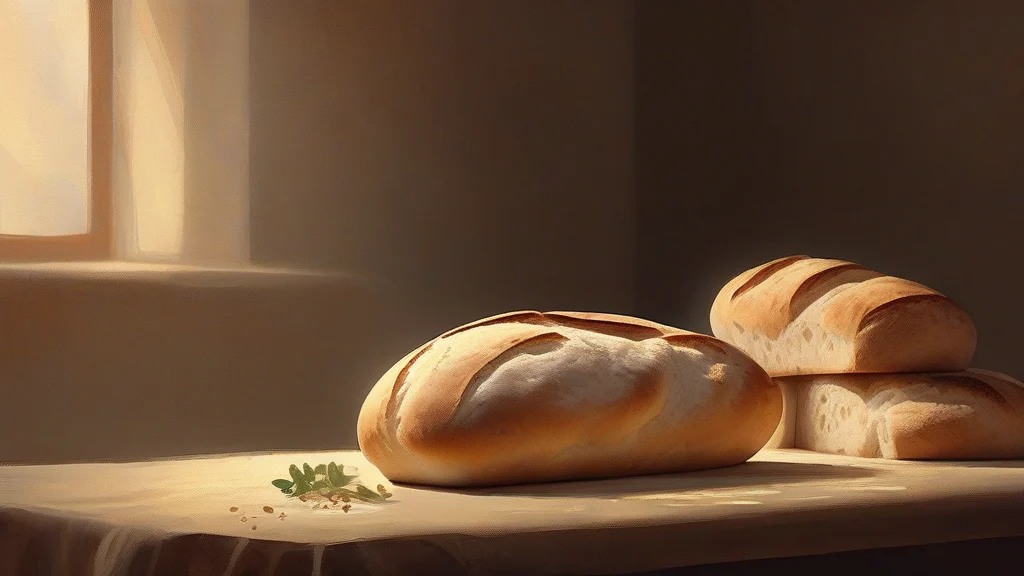
Ciabatta is an Italian white bread distinguished by its broad, flat, slipper-like shape, a thin crisp crust, and a soft, open-textured interior full of irregular holes. Made from a wet dough enriched with olive oil, it is prized for its chewy texture and mild, slightly tangy flavor, making it a popular choice for sandwiches, panini, and dipping into olive oil. In English-speaking countries the word appears frequently on café and deli menus, where 'a ciabatta' can refer not only to the loaf but also to a roll or a filled sandwich made from it. Though it evokes rustic tradition, ciabatta is a remarkably recent invention, created in northern Italy in 1982 as a homegrown response to the popularity of the French baguette. Its name comes from the Italian word for a worn house slipper, which the loaf's flattened shape was thought to resemble. Today ciabatta is baked worldwide and has become one of the most recognizable names in artisan-style bread.
nounA type of white bread made with olive oil, originating in Italy, characterized by a crisp crust and a soft, open-textured crumb. It is typically baked in a broad, flat, slightly elongated loaf resembling a slipper.
- The Italian-style bread itself: a flat, slipper-shaped loaf with a crisp crust and a soft, holey crumb.
- A sandwich or roll made using this bread (as in 'a ciabatta' ordered at a café).
"She sliced the ciabatta thickly, drizzled it with olive oil, and grilled it until the edges crisped."
"The bakery sells out of fresh ciabatta before ten most mornings."
"He ordered a mozzarella-and-tomato ciabatta with his espresso."
The plural applies when counting individual loaves or prepared sandwiches ('two ciabattas'); the uncountable form 'ciabatta' is preferred when referring to the bread as a substance or variety.
"The café toasted three ciabattas for the panini special."
Despite sounding like centuries-old Italian tradition, ciabatta was invented only in 1982, when a miller named Arnaldo Cavallari created it to answer the flood of French baguettes into Italian shops — and named it after its resemblance to a worn house slipper.
Reviewed by Deb Chak, Editor. AI-assisted content curated by RJS Tech Solutions LLP.
Etymology of ciabatta
The word 'ciabatta' comes from the Italian noun ciabatta meaning 'slipper' or 'worn-out house shoe', chosen because the loaf's flat, elongated shape resembles a slipper. The bread itself was developed in 1982 by Italian miller and baker Arnaldo Cavallari in the Veneto region, partly as a response to the growing popularity of French baguettes in Italy. Because the term entered English directly from modern Italian in the 1980s, it lacks the deep historical cognates of older loanwords.
How ciabatta is actually used
In everyday English usage, 'ciabatta' often functions as an uncountable noun when referring to the bread generally ('some ciabatta'), but takes the plural 'ciabattas' when referring to individual loaves or filled sandwiches. The word carries connotations of artisanal baking and café culture rather than formal dining, and is pronounced with anglicized stress in both British and American English.
Easily confused with ciabatta
A chapatti is a thin, unleavened flatbread of South Asian origin, whereas ciabatta is an Italian leavened white bread with a crisp crust and airy interior.