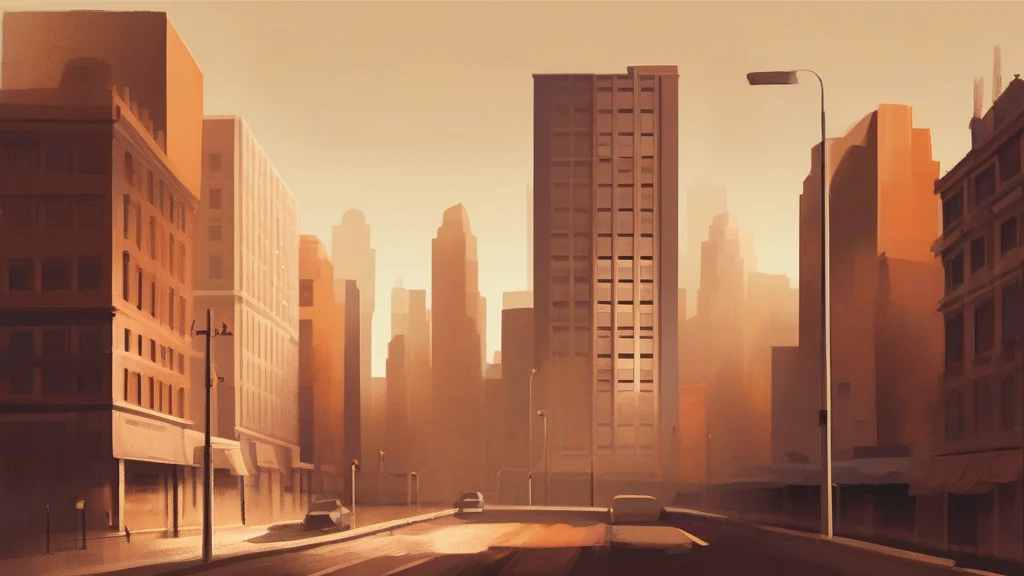
What does cityscape mean?
A cityscape is the visual appearance of a city — the combined impression created by its buildings, streets, skyline, and other urban features as seen by an observer. The term also refers to artistic depictions of such scenes, whether paintings, drawings, or photographs, much as a landscape refers to a view or picture of natural scenery. Cityscapes can be admired from vantage points such as rooftops, hillsides, or observation towers, and they are a central concern of architects and urban planners, who speak of preserving or transforming a city's character. In art history, cityscape painting emerged prominently in the seventeenth century with Dutch views of towns and gained new energy in the nineteenth and twentieth centuries as artists turned to the modern industrial metropolis. The word carries a neutral tone but often appears in contexts of aesthetic appreciation, evoking the drama of skyscrapers at dusk or the texture of old streets. It is a useful term for anyone writing about cities, travel, photography, or architecture.
nounA view or representation of a city, especially one showing its buildings and overall urban appearance; the visual character of a city's skyline and streets.
- A visual representation (painting, photograph, drawing) of a city or urban scene.
- The actual physical appearance or view of a city, especially its buildings and skyline.
"From the rooftop bar, we admired the glittering cityscape stretching toward the horizon."
"The gallery's new exhibition features striking cityscapes of New York at night."
"Developers were careful to preserve the historic character of the cityscape."
Standard plural; used when referring to multiple views or artworks depicting cities.
"The exhibition displayed cityscapes from Tokyo, Paris, and Cairo side by side."
"Cityscape" was coined on the model of "landscape" in the 19th century, when artists first began treating the modern industrial city itself as scenery worth painting.
Reviewed by Deb Chak, Editor. AI-assisted content curated by RJS Tech Solutions LLP.
Etymology of cityscape
Cityscape was formed in English by combining "city" with "-scape," a suffix borrowed from the older word "landscape." Landscape itself came into English from Dutch "landschap" in the late sixteenth century, originally meaning a painting of inland natural scenery. Following that model, English speakers coined parallel terms such as "seascape" and later "cityscape" during the nineteenth century, when urban scenes became a recognized subject for painters. The word thus belongs to a family of compounds built on the same productive suffix.
How cityscape is actually used
Used in both everyday speech about views of cities and in art-historical contexts for paintings or photographs of urban scenes. Often employed in discussions of architecture, urban planning, and tourism. Neutral connotation; it describes rather than evaluates, though it frequently appears in praise of dramatic skylines.
Easily confused with cityscape
A landscape is a view of natural scenery such as fields or mountains, while a cityscape specifically depicts an urban scene of buildings and streets.