What does clachan mean?
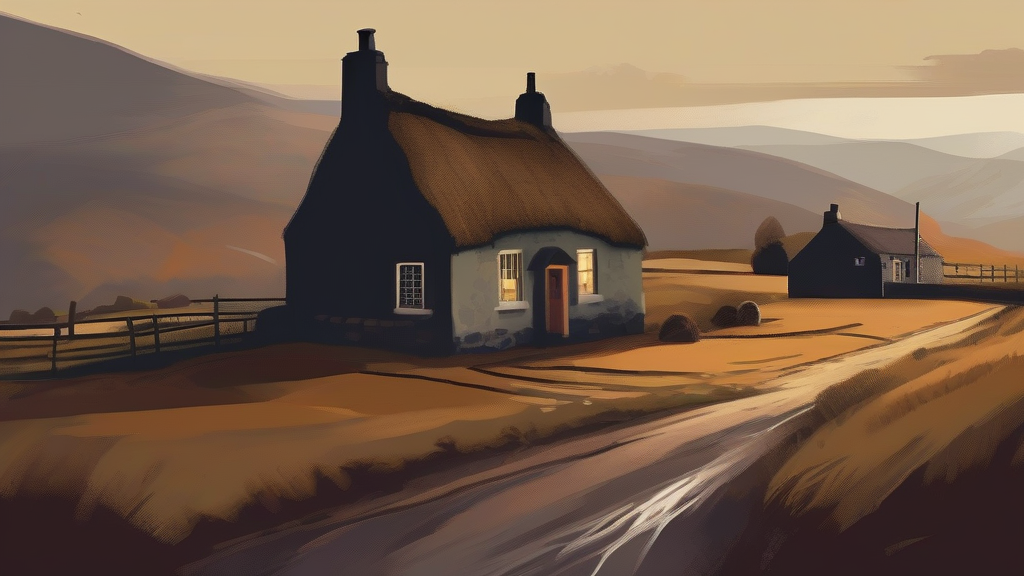
A clachan is a small village or hamlet found in the Scottish Highlands and Islands and in Ireland. The word traditionally describes a loose cluster of cottages or crofts, often gathered around a church or kirkyard, which gave such settlements their social and spiritual center. Unlike an English 'village,' which may imply a more formal structure, a clachan suggests a scattered, rural grouping of dwellings tied to farming and clan life. The term derives from Scottish and Irish Gaelic and remains embedded in numerous Scottish place names, including villages literally called Clachan. Today it survives mainly in regional speech, historical writing, and literature about Highland communities, where it evokes a way of life centered on small, close-knit rural settlements. For readers interested in Scottish culture, geography, or genealogy, it is a useful and evocative word.
nounA small village or hamlet in the Scottish Highlands and Islands or Ireland, traditionally one clustered around a church or kirkyard.
- A small village or hamlet, especially one grouped around a church in Scotland or Ireland.
"They stopped for the night in a tiny clachan on the shores of Loch Fyne."
"The road wound down into a scattered clachan of whitewashed cottages."
"In the old days, every clachan had its own weaver and its own smithy."
Standard pluralization; used when referring to multiple such settlements.
"The glen was dotted with half a dozen ruined clachans."
Scotland has so many of these little settlements that 'Clachan' appears as the name of several actual villages on the map.
Reviewed by Deb Chak, Editor. AI-assisted content curated by RJS Tech Solutions LLP.
Etymology of clachan
The word comes from Scottish Gaelic and Irish Gaelic 'clachan,' ultimately rooted in 'clach' (Gaelic for stone). It entered English through descriptions of Highland and Irish rural settlements and became established in Scots and English usage by the early modern period, particularly in reference to church-centered villages.
How clachan is actually used
The word carries a distinctly Scottish and Irish flavor; it appears chiefly in writing about Highland life, local history, and place names rather than in everyday general English.