
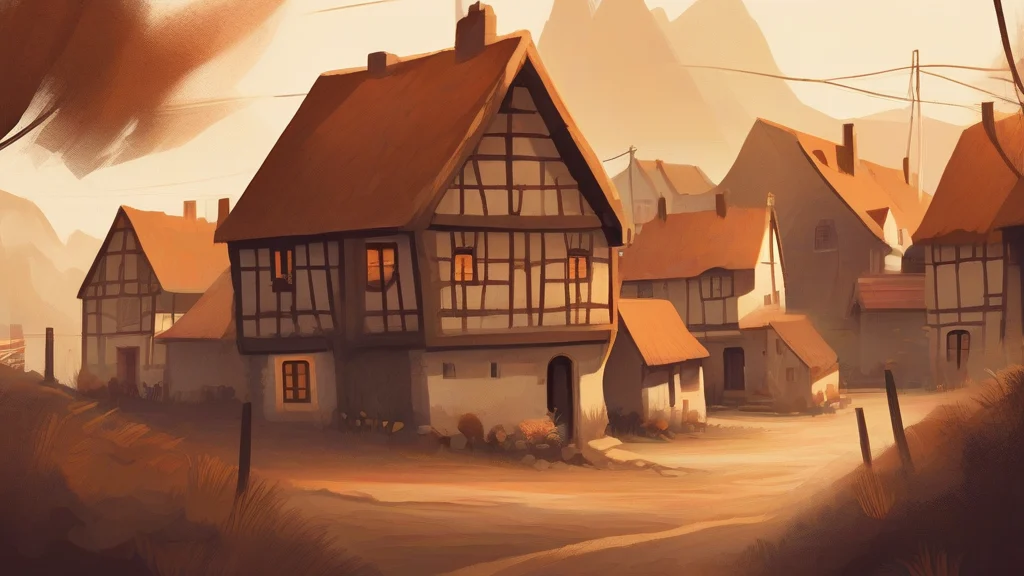
What does village mean?
A village is a small settlement, usually in a rural area, with homes and perhaps a shop, school, pub, or other community facilities. The term is common in British and American English, though its social and administrative connotations vary. In everyday use, village often carries a warm, communal, and sometimes nostalgic association, especially when a place is described as peaceful, traditional, or close-knit. It can also refer more broadly to a small rural community without implying any particular official status. In some regions, especially parts of Britain, the word may identify a historically recognized local unit as well as the people and buildings within it. The related word villager denotes a resident, while villa usually means a detached country or suburban house. The word descends from Latin villa, an estate or country house, through Old French. Its history therefore reflects a long-standing European pattern in which a modest settlement grew around landholding, agriculture, and local community life. Village remains useful because it identifies both a physical place and the communal image such places often carry.
nounA village is a small settlement, typically in a rural or semi-rural area, consisting of homes and possibly a small number of community facilities. In some places, the term also denotes a historically defined local community or administrative unit.
- A small settlement in a rural or semi-rural area, typically comprising homes and a limited number of community facilities.
- The inhabitants of a village regarded collectively, especially when a community is contrasted with an individual, a town, or a larger institution.
"We drove through a quiet village where stone cottages surrounded a small green."
"The village has a bakery, a primary school, and a pub beside the church."
"The whole village welcomed the new doctor when she arrived."
The standard plural of village is villages.
"Several villages along the river are connected by a narrow road."
From a Latin country estate to a close-knit rural community, village carries both a place and a social ideal.
Reviewed by Deb Chak, Editor. AI-assisted content curated by RJS Tech Solutions LLP.
Where does village come from?
The English word village comes through Old French from Latin villa, an estate or country house, and entered English during the medieval period. The meaning developed from a rural estate or farm into a small settlement associated with such a place. Related forms include the Romance cognate ville, while villa and villain preserve other developments of the same Latin root; villain originally referred to a peasant or villager before acquiring its later unfavorable sense.
Related word forms
How village is actually used
The word is broadly used in British and American English. It can sound especially nostalgic, pastoral, or communal in literary and media contexts, while official and administrative uses may emphasize a recognized community or locality rather than a romantic rural image.
Easily confused with village
A village is a settlement, whereas a villa is usually an individual detached house, often used as a holiday residence.
A village is the place, while a villager is a person who lives in it.