
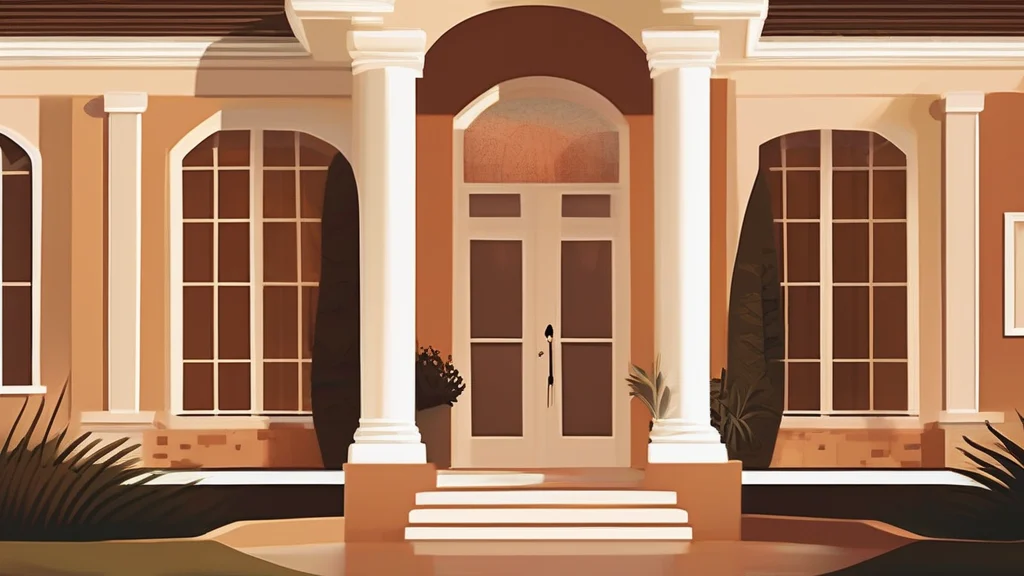
What does villa mean?
A villa is a detached or semi-detached house, especially one that appears spacious, comfortable, and affluent. The word is frequently used in real-estate descriptions and holiday travel, where it may suggest a residence with gardens, a pool, or a setting in a warm or picturesque region. In British English, villa can be used relatively broadly for a suburban detached house; in other varieties and in international usage, it often conveys a more luxurious or holiday-home association. Historically, the word referred to a country estate in ancient Rome, and that sense remains important in archaeology and the history of classical art and architecture. In everyday use, villa is usually a noun, while villas is its regular plural. Its associations with leisure, privacy, and residential spaciousness make it especially useful when describing elegant homes and vacation accommodation.
nounA detached or semi-detached country house, especially one associated with a garden or an affluent residential area. Historically, the word also referred to a rural estate in ancient Rome.
- A detached or semi-detached house, especially an affluent or luxurious residence in a warm climate or a residential area with gardens.
- A country house or rural estate in ancient Rome.
- A villa or country residence in the classical Mediterranean tradition, often associated with an upper-class owner.
"They rented a villa overlooking the sea for the summer."
"The guide recommended a traditional villa in the countryside."
"The archaeological site preserves the remains of a Roman villa and its surrounding agricultural land."
The regular plural of the noun villa.
"Several luxury villas line the coast."
The word villa began as a Roman country estate and now names the kind of spacious house people often dream of renting for a holiday.
Reviewed by Deb Chak, Editor. AI-assisted content curated by RJS Tech Solutions LLP.
Where does villa come from?
The English word villa was borrowed from Italian villa, meaning a country house, which in turn comes from Latin villa, “country house” or “rural estate.” In ancient Rome, villa commonly denoted an aristocratic country residence, sometimes including extensive agricultural land. The same Latin root also underlies French ville and, through Old French, English village; villain developed through the Late Latin form villanus, originally referring to a person associated with a rural estate.
How villa is actually used
In modern English, villa often carries an affluent, spacious, or luxurious connotation, although it can refer simply to a detached house. It is especially common in British, Australian, and international real-estate and travel contexts.
Easily confused with villa
A villa is a house or residential property, whereas a village is a small settlement containing a group of homes and other buildings.