
What does mansion mean?
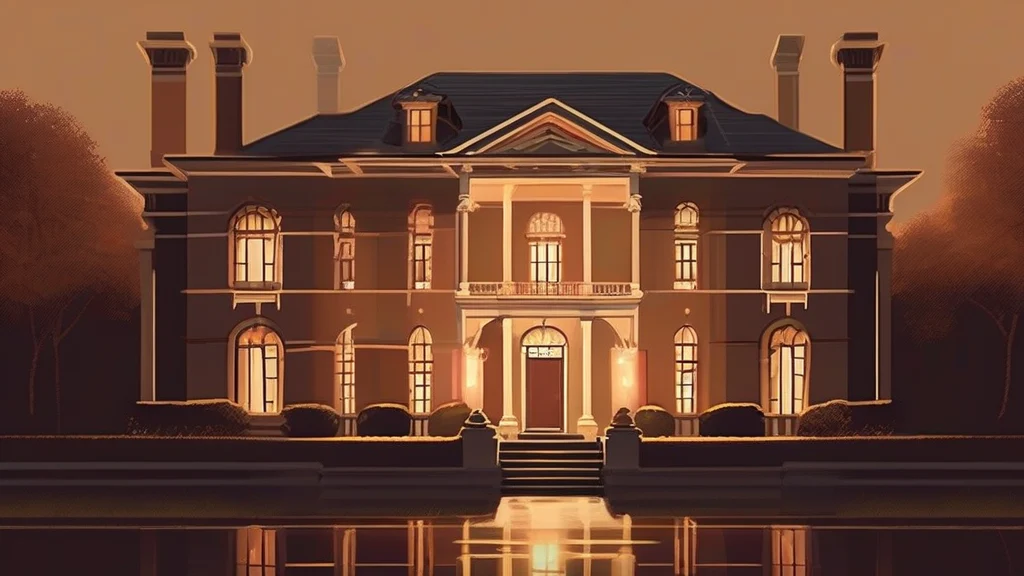
A mansion is a large, impressive, generally luxurious house. The word often suggests considerable wealth, spacious surroundings, and an imposing architectural style, making it stronger and more specific than “house” while differing from “home” in its emphasis on scale and luxury. In British English, it usually refers to a substantial private residence. In North American English, it can also describe a large residential building, sometimes one containing luxury apartments. Historically, the term was not always associated with grandeur: it developed from Latin mansio, denoting a stopping place or lodging, and entered English through French. Over time, its meaning developed toward that of a grand or elegant dwelling. Today it is common in property descriptions, historical accounts, and references to affluent homes, though it may sound formal or promotional rather than neutral in everyday conversation.
nounA large, impressive, usually luxurious house. In North American English, the term can also denote a large residential building, sometimes with several apartments.
- A large, impressive, usually luxurious house.
- In North American English, a large residential building, especially one containing luxury apartments.
"The historic mansion stood behind tall iron gates and carefully maintained gardens."
"She grew up in a mansion overlooking the lake."
"The apartments occupied the upper floors of the mansion near the park."
The regular plural is used for multiple houses or residential buildings.
"Several grand mansions line the avenue."
The grandest of homes began modestly: its name comes from the Latin mansio, meaning a stopping place or lodging during a journey.
Reviewed by Deb Chak, Editor. AI-assisted content curated by RJS Tech Solutions LLP.
Where does mansion come from?
The word comes through French mansion, from Latin mansio, meaning a dwelling, lodging, or stopping place. Latin mansio developed from manere, “to remain or stay,” and was originally associated with a place where a traveler or official could stay. English later came to use “mansion” for a large and imposing house, while related forms include “manse” and “manor.”
How mansion is actually used
The word is widely understood in British and North American English but is more closely associated with wealth and luxury than the general word “house.” In North America it may also name an upscale apartment building; in British usage it usually denotes a single large residence. “Mansion tax” is a modern term, especially associated with taxes on very expensive residential properties.
Easily confused with mansion
A mansion is primarily a large, luxurious house, whereas a manor is traditionally a country house or estate with associated land and, historically, tenant farmers.
A manse is the residence of a minister, especially in the Church of Scotland, while a mansion generally denotes an unusually large or luxurious private residence.