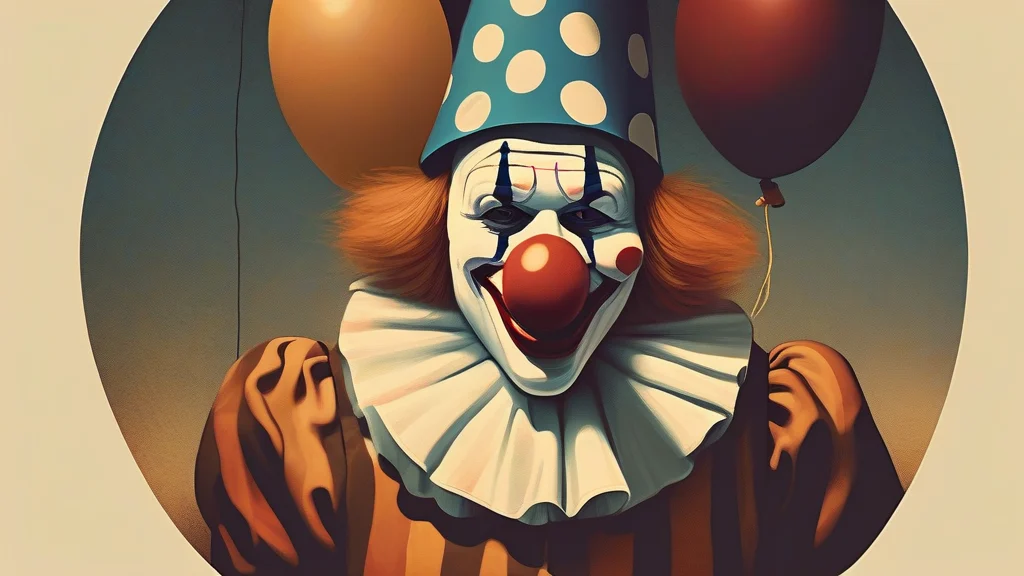
What does clowning mean?
Clowning refers both to the craft of performing as a clown — using exaggerated movement, slapstick, mime, and visual humor to entertain an audience — and, more loosely, to any silly or playful behavior intended to get a laugh. As an established performing art, clowning has deep roots in European theater, tracing back through commedia dell'arte and the rustic fool characters of Elizabethan drama to the modern circus whiteface and Auguste clowns. Beyond the stage, the word often appears in casual phrases like 'clowning around,' describing lighthearted mischief that can be endearing among friends but irritating in a classroom or workplace. The tone of the word therefore depends on context: respectful when discussing a skilled performer's art, mildly critical when applied to someone who should be taking things seriously.
The activity of performing as a clown, or the style of physical comedy such performers use.
"He studied clowning at a Parisian theater school before joining the circus."
Informally, playful or silly behavior; fooling around.
"Enough clowning — let's get back to work."
The word 'clown' originally had nothing to do with circus makeup — it first meant a clumsy, uncouth farmhand before actors turned the rustic fool into a stage favorite in Shakespeare's time.
Reviewed by Deb Chak, Editor. AI-assisted content curated by RJS Tech Solutions LLP.
Etymology of clowning
The word 'clown' entered English in the sixteenth century, most likely borrowed from a Scandinavian source related to Old Norse 'klunni,' meaning a clumsy fellow. Its earliest sense referred to a rude, unsophisticated countryman rather than a comic performer, and it was only through stage roles — notably Shakespeare's rustics and jesters — that the word came to denote a professional jester and eventually the circus performer we know today. 'Clowning' arose as the action noun and gerund of this verb-noun family, alongside relatives such as 'clownish' and 'clownery.'
How clowning is actually used
In its literal sense, 'clowning' is neutral and often admiring, referring to a genuine performing art with a long theatrical tradition. In everyday speech it frequently appears in the phrase 'clowning around,' where it carries a mildly disapproving connotation of wasting time or behaving immaturely. It is informal to neutral in register.
Easily confused with clowning
'Cloning' means producing genetically identical copies of an organism, while 'clowning' refers to comic performance or fooling around.