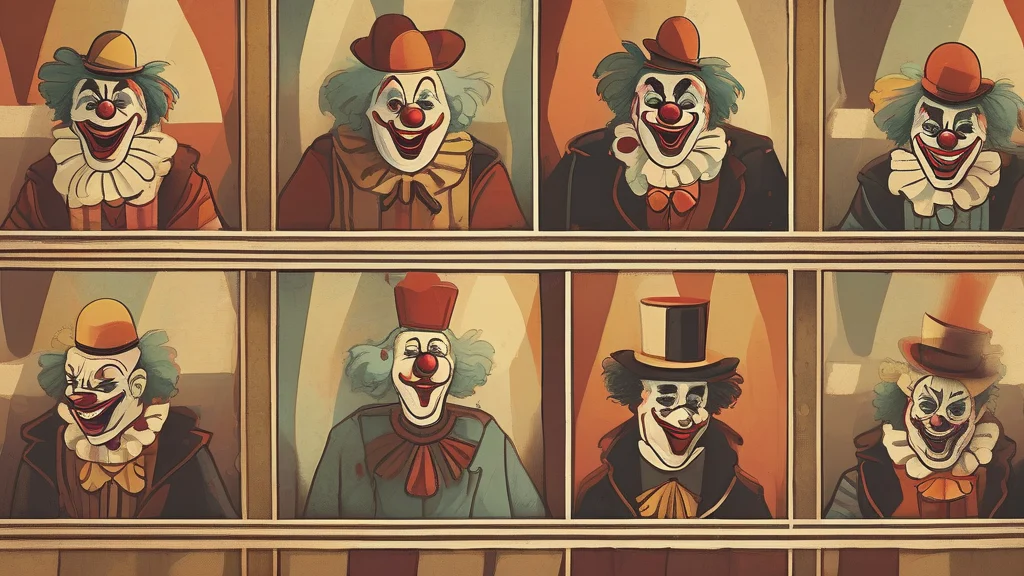
What does clownery mean?
Clownery is a noun denoting clownish or buffoonish behaviour — the silly antics, pratfalls, and exaggerated foolishness associated with clowns. The word applies both literally, as in the routines of a circus performer, and figuratively, as when commentators describe political debates or corporate announcements that dissolve into farce as 'pure clownery'. It carries connotations ranging from affectionate amusement, when describing genuine comic performance, to open contempt, when used of people who ought to be taken seriously but behave absurdly instead. Common synonyms include buffoonery, tomfoolery, and antics. Formed from 'clown' with the suffix '-ery', it belongs to a family that includes 'clownish' and 'clowning'. Though somewhat informal in register, it is a useful word for puncturing pretension, capturing in one term the spectacle of dignity giving way to ridiculousness.
Clownish behaviour; silly or buffoonish antics.
"His speech was less a policy address than an exercise in clownery."
Often used pejoratively of public figures or institutions.
The craft or practice of performing as a clown.
"She studied classic circus clownery at a performing arts school."
Rarely used in the plural; the uncountable singular is standard, though 'clowneries' can appear when referring to distinct instances of clownish acts.
"The memoir recounts the clownerieies of his early years on stage."
'Clownery' has been mocking foolish antics since at least the 1600s — long before the red nose and rubber chicken were invented.
Reviewed by Deb Chak, Editor. AI-assisted content curated by RJS Tech Solutions LLP.
Etymology of clownery
Clownery is formed from 'clown' plus the suffix '-ery', which denotes behaviour or a class of activity (compare 'skulduggery' or 'buffoonery'). The noun 'clown' itself entered English in the sixteenth century, originally meaning a rustic peasant or boor, and only later acquired its modern sense of a comic performer; its further origins are uncertain, possibly from Low German or Scandinavian sources. Clownery arose as English speakers sought a collective term for clownish conduct, and it has been in use since at least the seventeenth century.
Related word forms
How clownery is actually used
Register is informal to neutral; often used with mild contempt when describing public figures or institutions behaving absurdly, but affectionate in contexts of actual circus or performance clowning.
Easily confused with clownery
Both mean clown-like behaviour and are near-synonyms; 'clownery' is the more established form, while 'clownage' is a rarer, more jocular variant.