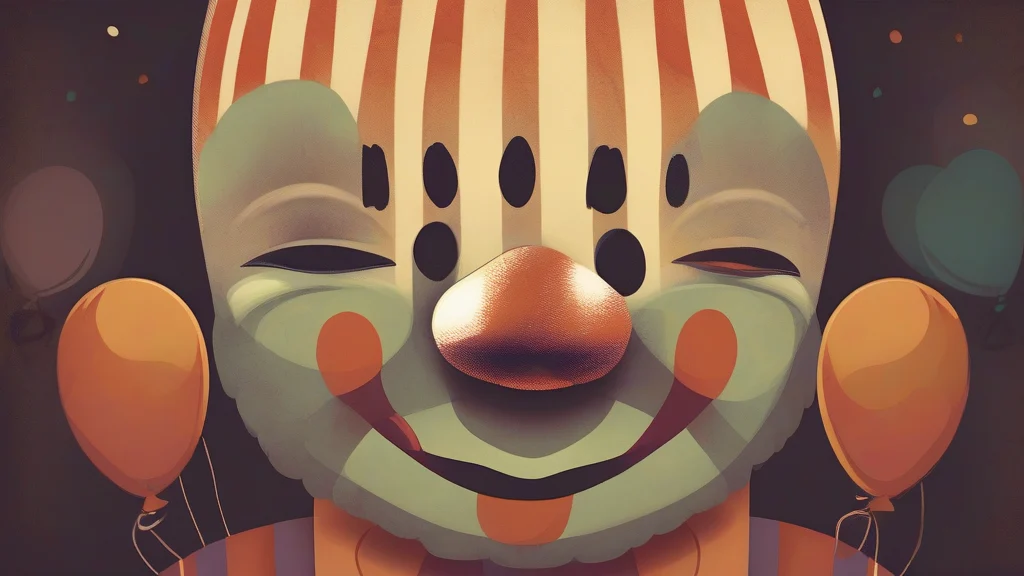
What does clownishness mean?
Clownishness is the noun form of the adjective clownish, referring to behaviour that resembles that of a circus clown: buffoonery, slapstick playfulness, or absurd antics. The word carries a strongly evaluative charge. Used warmly, it celebrates someone's comic spirit — an entertainer whose clownishness delights audiences, for example. Used critically, it condemns frivolous or undignified conduct, particularly in settings where seriousness is expected, such as government, courtrooms, or the workplace. The root word 'clown' originally meant a rustic peasant or boor in sixteenth-century English, before Shakespeare popularised it as a comic figure, so clownishness historically could also imply coarseness or lack of refinement — a nuance that survives mainly in literary contexts. Today the dominant sense is behavioural: silly, exaggerated, attention-seeking playfulness. Writers reach for clownishness when they want to characterise not just a single joke but a settled habit of behaving like a fool, whether charmingly or damningly.
nounThe quality or behaviour of a clown; foolish, buffoonish, or absurdly playful conduct, especially when it seems inappropriate to the occasion.
- Behaviour characteristic of a clown; buffoonish or absurdly playful antics, especially when ill-suited to a serious occasion.
- The quality of being coarse, boorish, or lacking in refinement (an older sense reflecting 'clown' as a rustic peasant).
"His clownishness at the board meeting cost him the respect of his colleagues."
"Her clownishness on set kept the crew laughing between takes."
"Critics dismissed the senator's clownishness as an affront to the dignity of his office."
Rarely pluralised; the singular mass-noun sense is standard, though the plural can appear when contrasting distinct instances or styles of clownish behaviour.
"The film's two leads display contrasting clownishnesses — one broad and physical, one sly and verbal."
Shakespeare gave us 'clown' as a stock rustic fool long before red noses and oversized shoes — and 'clownishness' still carries that older whiff of the uncouth country bumpkin.
Reviewed by Deb Chak, Editor. AI-assisted content curated by RJS Tech Solutions LLP.
Etymology of clownishness
Clownishness derives from clownish, which combines 'clown' with the suffix '-ish'. The English word 'clown' first appears in the sixteenth century meaning a rustic peasant or country bumpkin, of uncertain ultimate origin, possibly Scandinavian. Under Shakespeare's influence it shifted to mean a comic stage fool and later the familiar circus performer. The abstract noun clownishness, formed with the suffix '-ness', emerged by the seventeenth century to denote the quality of being clown-like.
Related word forms
How clownishness is actually used
Mostly used in evaluative or critical contexts — describing someone's behaviour rather than neutral description. It can be affectionate (a beloved comedian's clownishness) or disapproving (clownishness in a position of authority). The older association with rustic coarseness has largely faded, but it can colour the word in literary use.
Easily confused with clownishness
Clownish is the adjective describing behaviour resembling a clown's, while clownishness is the noun denoting that quality itself.