
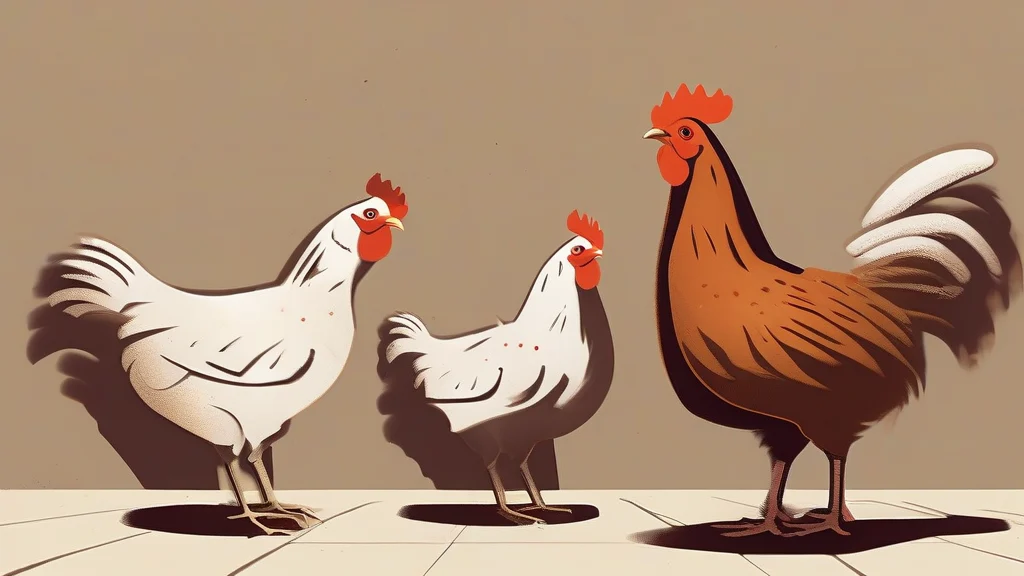
What does clucked mean?
"Clucked" is the past tense and past participle of the verb "cluck," describing the short, low, guttural sound made by a hen or similar bird. The word extends naturally to humans: people are said to have clucked when they make a quick clicking noise with the tongue to signal disapproval, sympathy, or mild reproach, as in "she clucked at the mess." By extension, someone who fusses anxiously or protectively over others may be said to have clucked over them, evoking the image of a brooding hen tending her chicks. The verb derives from Middle English and is imitative in origin, echoing the sound itself. In register, "clucked" is neutral when describing birds but can carry a faintly critical or condescending tone when applied to people, suggesting tutting judgment rather than open argument. Its vivid onomatopoeic quality makes it a favorite in both rural description and figurative commentary on human behaviour.
verbPast tense and past participle of "cluck": to make the short, low sound a hen makes, or to make a similar disapproving tongue-clicking sound with one's mouth.
- (of a hen or other bird) made the characteristic short, low guttural sound of a chicken.
- Made a clicking sound with the tongue to express disapproval, sympathy, or mild criticism.
- (figurative) expressed fussy or protective concern, like a brooding hen over her chicks.
"The hens clucked contentedly as they pecked at the grain scattered across the yard."
"The farmer's hens clucked softly as they settled onto their nests for the evening."
"Grandmother clucked her tongue at the state of his muddy boots but let him in anyway."
The same word that describes a motherly hen also captures that sharp 'tsk-tsk' of human disapproval — chickens have been scolding us for centuries.
Reviewed by Deb Chak, Editor. AI-assisted content curated by RJS Tech Solutions LLP.
Etymology of clucked
"Cluck" is an imitative formation, first recorded in Middle English around the late fifteenth century, created to mimic the actual sound a hen makes. It developed within English as a direct phonetic imitation rather than being borrowed from another language, though it has close parallels in other Germanic languages such as Dutch "klokken." The figurative sense of making a disapproving tongue click emerged later by natural extension of the sound association. Related words include the noun "cluck" for the sound itself.
Related word forms
How clucked is actually used
Most often used of literal bird sounds; the figurative sense — clucking in disapproval or fussing protectively — carries a mildly negative or patronizing connotation when applied to people.
Easily confused with clucked
"Clocked" means timed, registered, or noticed something, while "clucked" refers to making a hen-like sound or a disapproving clicking noise.