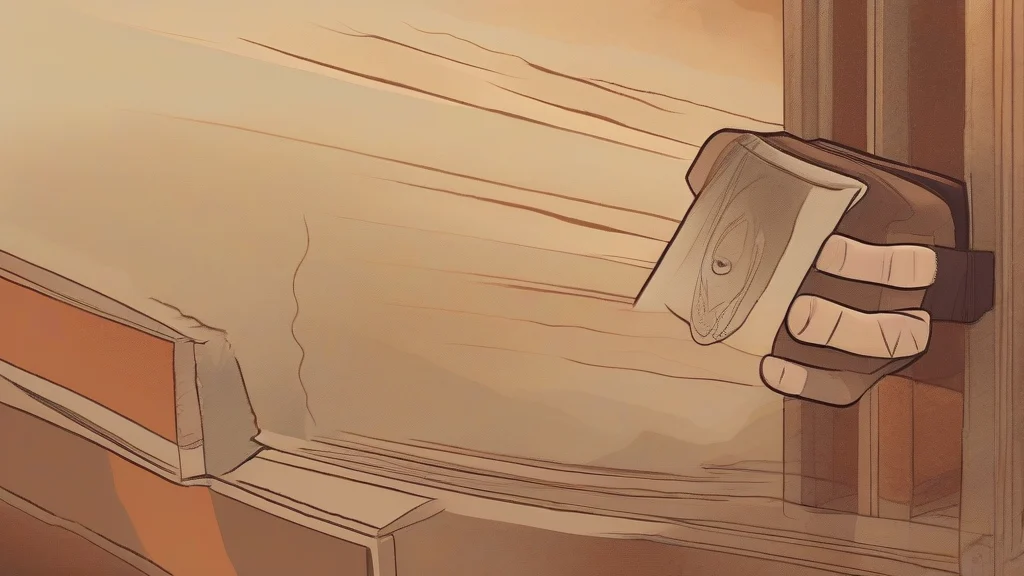
What does clutched mean?
"Clutched" is the past tense and past participle of the verb "clutch," meaning to grasp or hold something tightly, usually with the hands. The word almost always implies emotional intensity: people clutch belongings, loved ones' arms, railings, letters, or purses when they feel afraid, anxious, possessive, or desperate. A passenger might have clutched the seat during turbulence; a child may have clutched a favorite toy. Beyond physical grip, "clutched" appears in the well-known idiom "clutching at straws," which describes desperately seizing on weak hopes or feeble arguments when real options have run out. The verb derives from Old English "clyccan," meaning to clench or grasp, giving it deep roots in the language. Because it fuses a simple physical action with visible emotion, "clutched" is a vivid, economical choice for writers who want to show a character's state of mind through gesture rather than explanation.
verbPast tense and past participle of "clutch": to grasp or hold something tightly, especially with the hands, often out of fear, anxiety, or eagerness.
- To grasp or hold something tightly, typically with the hands, often from fear, anxiety, or protectiveness.
- (figurative) To cling mentally or emotionally to an idea, hope, or belief, as in 'clutching at straws.'
"She clutched the letter to her chest as she read the news."
"He clutched the railing as the ship pitched in the storm."
"The losing team clutched at any excuse for their defeat."
When you're 'clutching at straws,' you're doing exactly what the idiom describes: grabbing at whatever flimsy thing floats by because you have nothing solid left to hold onto.
Reviewed by Deb Chak, Editor. AI-assisted content curated by RJS Tech Solutions LLP.
Etymology of clutched
"Clutched" comes from the verb "clutch," which developed from Middle English "clucchen" and ultimately from Old English "clyccan," meaning to clench or grasp firmly. The word has been part of English since its earliest recorded stages, making it a native Germanic formation rather than a borrowing from Latin or French. Its sense of grasping has remained remarkably stable over the centuries, though the modern idiom "clutch at straws" added a figurative layer of desperation to the original literal grip.
Related word forms
How clutched is actually used
"Clutched" carries a connotation of urgency or emotion — people clutch things when they are frightened, desperate, protective, or eager — so it is more evocative than neutral verbs like "held" or "carried." It is standard in both formal and informal registers. The figurative use in "clutch at straws" is well established in British and American English alike.
Easily confused with clutched
"Crotchet" is an unrelated word meaning a quirky idea or a musical quarter note; it merely resembles "clutch" in spelling.
"Crutched" means supported on crutches, whereas "clutched" means gripped tightly in the hand.