
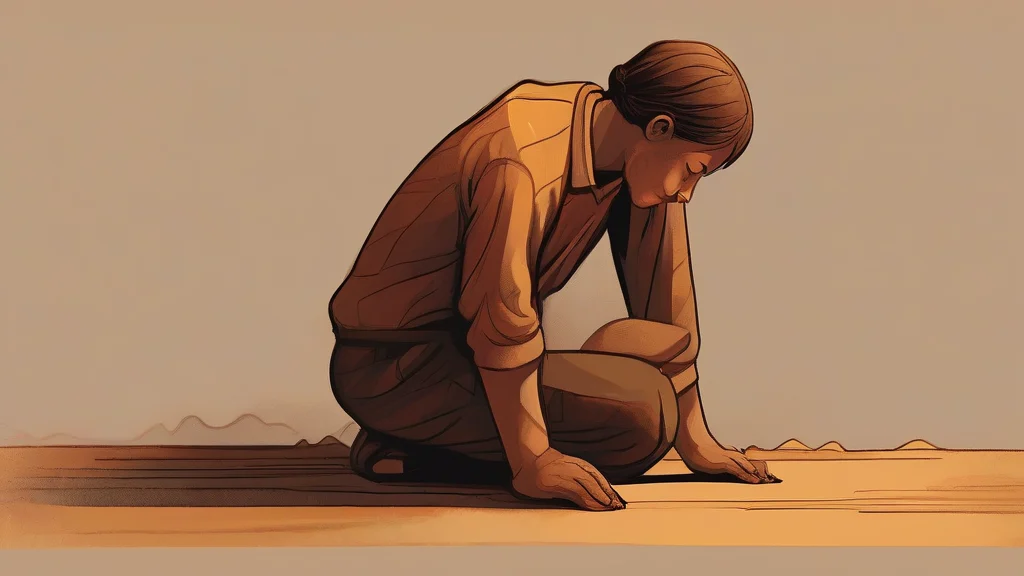
What does hunched mean?
Hunched describes a body position that is bent forward or rounded, usually with raised shoulders and a curved back. A person may hunch because of age, cold, discomfort, fatigue, or intense concentration, while hunching the shoulders can also communicate discomfort or defensiveness. The word is particularly associated with posture: “hunched shoulders” and “hunched over a desk” are established expressions. Although it can sometimes carry the implication of being elderly or physically frail, that meaning depends strongly on context and is not inherent in the word. As a verb, “hunched” describes the act of drawing the shoulders or upper body forward and inward. Hunched is used in ordinary British and American English and is more specific than a general term such as “bent,” since it typically suggests a distinctly rounded or closed posture.
Bent forward or rounded, especially with the shoulders raised and the back curved.
"He remained hunched in his chair, shivering in the cold."
Often describes shoulders, a back, a posture, or a person’s entire stance.
Bent the upper body forward or drew the shoulders upward and inward.
"She hunched her shoulders and hurried toward the exit."
The usual past participle form; it can also appear in the present participle as “hunching.”
A hunched posture can reveal more about mood than posture alone: it may show concentration, discomfort, age, or an attempt to make oneself small.
Reviewed by Deb Chak, Editor. AI-assisted content curated by RJS Tech Solutions LLP.
Where does hunched come from?
The word derives from the English noun “hunch,” originally referring to a lump or protuberance and later developing associations with a rounded shape. Its use for a raised-shouldered, bent-forward posture developed from this physical sense and is now the most familiar meaning of “hunched.”
Related word forms
How hunched is actually used
The adjective is especially common in descriptions of the back, shoulders, posture, or a person’s overall stance. It can suggest age, weariness, discomfort, concentration, or guardedness depending on context.