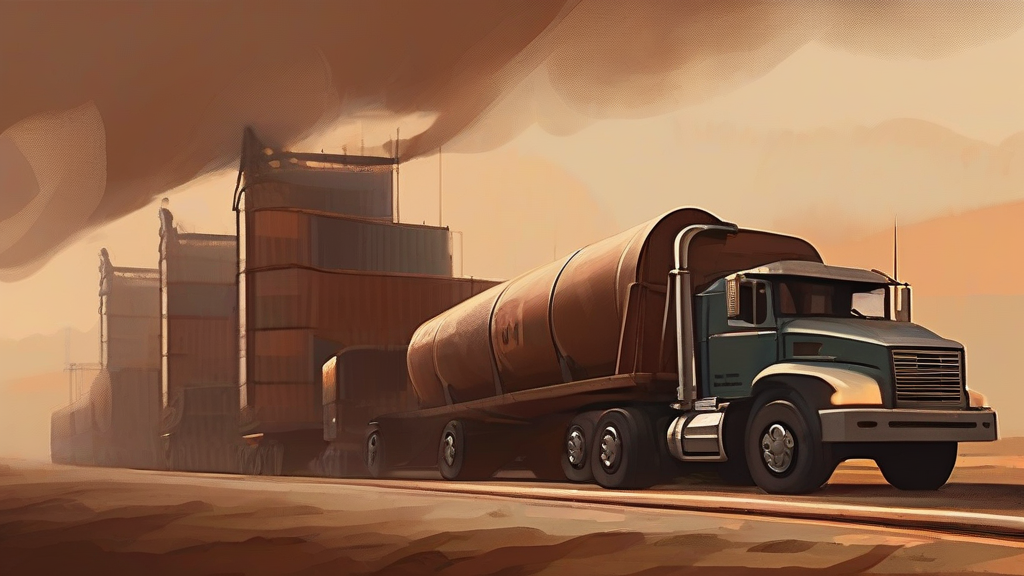
What does coaled mean?
"Coaled" is the past tense and past participle of the verb "coal," meaning to supply or load a ship, furnace, locomotive, or stove with coal. The word is firmly rooted in the industrial era, when steamships and railways depended on regular deliveries of coal to keep their engines running. A vessel that had coaled was one that had taken on sufficient fuel for its next leg, often at a dedicated coaling station. The term survives today mainly in historical and maritime writing — accounts of naval logistics, early ocean liners, and steam-era industry — where it conveys the labor-intensive routine of bunkering ships with coal, frequently by hand. Though rare in modern speech, it remains useful for writers describing the coal-fired age, carrying connotations of hard work, smoke, and the machinery of nineteenth- and early twentieth-century transport.
verb (past tense and past participle of "coal")Past tense and past participle of "coal": supplied or filled with coal, as a ship, furnace, or stove. Also used of a ship taking on a supply of coal.
- Supplied or loaded with coal (a ship, furnace, locomotive, or other coal-burning vessel or device).
- Took on a supply of coal (of a ship or vehicle itself).
"The steamer coaled at Cardiff before beginning her transatlantic crossing."
"The crew coaled the furnaces through the night to keep up steam."
"HMS Dreadnought coaled at Gibraltar before sailing for the Mediterranean."
Before oil took over the seas, warships and ocean liners planned entire routes around ports where they could be coaled — sometimes hauling thousands of tons aboard by hand.
Reviewed by Deb Chak, Editor. AI-assisted content curated by RJS Tech Solutions LLP.
Etymology of coaled
The verb "coal" derives from the noun "coal," from Old English "col," meaning charred or burned substance, common to the Germanic languages (compare Dutch "kool" and German "Kohle"). The verb, meaning to supply with or take on coal, developed as the fuel became central to industry and shipping, and "coaled" is simply its regular past tense and participle. Its cognates are therefore Germanic rather than Latinate, tied to the shared Old English root behind words like "collier" and "charcoal."
Related word forms
How coaled is actually used
"Coaled" belongs chiefly to historical and nautical registers; it appears most often in writing about the age of steam, when coaling stations were strategic necessities. In everyday modern usage it is rare.
Easily confused with coaled
"Coaled" means supplied with coal, while "colder" is the comparative of "cold," meaning lower in temperature — they differ by one letter but are unrelated in meaning.