What does cocotte mean?
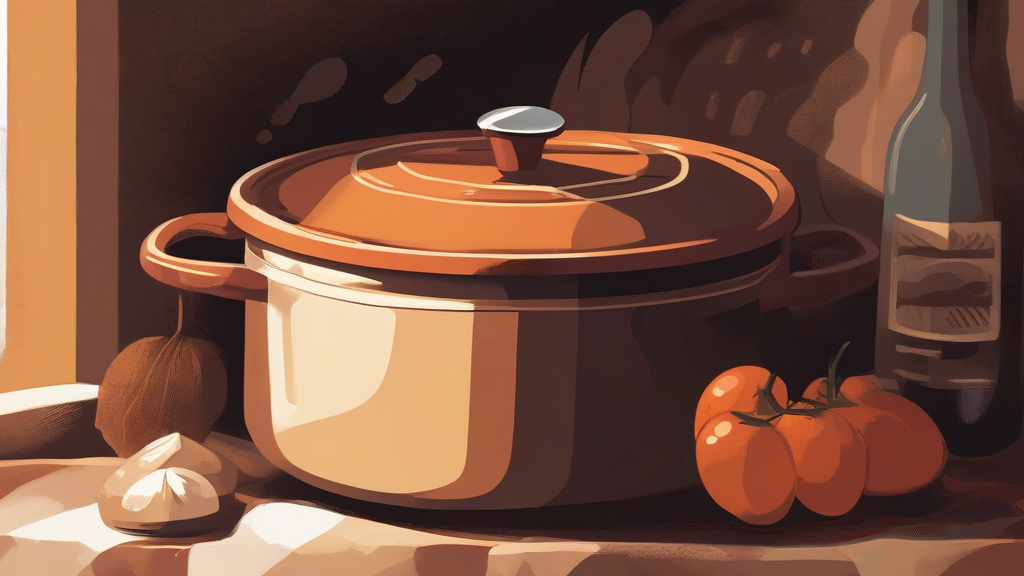
A cocotte is a small, sturdy cooking vessel — usually an oval pot of heavy cast iron, often coated in colourful enamel, fitted with a snug lid and used for braising, roasting, and slow simmering on the stove or in the oven. The word entered English from French, where it originally meant a hen kept for fattening and later took on other senses, including a slang term for a woman of loose morals that survives mostly in older literature. Today, when English speakers say cocotte, they almost always mean the cookware: the kind of pot associated with premium French brands like Le Creuset and Stub, prized because its thick walls distribute heat evenly and its heavy lid traps moisture, turning tough cuts of meat tender over hours of gentle cooking. Recipes frequently instruct cooks to brown ingredients first and then transfer them, covered, into a preheated cocotte, so the term appears constantly in modern cookbooks and food media.
A small, heavy casserole dish or covered cooking pot, typically oval and made of enamelled cast iron, used for braising and slow cooking.
"She transferred the browned beef shin into a preheated cocotte and let it braise gently for three hours."
Strongly associated with premium French cast-iron cookware brands; often used interchangeably with 'Dutch oven' in American usage.
(Historical/literary) A woman of loose morals; a prostitute.
"The novel's heroine rises from modest origins to become one of the most sought-after cocottes of the Second Empire."
Now largely obsolete in everyday English; encountered mainly in nineteenth- and early twentieth-century fiction and social history.
Standard pluralisation applies; used both for multiple pieces of cookware and, in historical contexts, for multiple women described by the older sense.
"The kitchen shelves were lined with brightly coloured cocottes in every size."
The word for a flirtatious woman and the word for a fancy French casserole are essentially cousins — both trace back to the same little 'cot' or hut.
Reviewed by Deb Chak, Editor. AI-assisted content curated by RJS Tech Solutions LLP.
Etymology of cocotte
Cocotte comes directly from French, where it began as a diminutive form related to 'cote' (a shed or coop), originally referring to a small hen kept for fattening. From this humble poultry sense, French developed figurative uses, including a slang term for a woman of loose morals that became prominent in nineteenth-century Parisian literature. The cookware sense — the small lidded casserole familiar to modern cooks — was popularised through French kitchen tradition and exported internationally along with celebrated enamel-coated cast-iron brands, cementing cocotte in contemporary English chiefly as the name of a piece of cookware rather than of a bird or a person.
How cocotte is actually used
The cookware sense is by far the most common today and carries an air of culinary sophistication — often associated with French cookware brands such as Le Creuset and Staub. The older sense meaning a prostitute is now largely historical or literary, encountered mainly in 19th- and early-20th-century fiction. In everyday English speech, many cooks simply say 'casserole' or 'Dutch oven' instead of 'cocotte', making the word feel slightly specialist or aspirational in food writing and kitchen retail.
Easily confused with cocotte
A coquette is a flirtatious woman, while a cocotte is a small casserole dish (or, in older usage, a prostitute).