What does codling mean?
Codling most commonly refers to a young or small cod, the familiar North Atlantic food fish, and appears often in fishing reports, seafood markets, and recipes on both sides of the Atlantic. The word carries a second, older meaning: an English variety of apple, once widely grown for cooking. That apple sense lives on most vividly in the term 'codling moth', a pest whose caterpillars burrow into ripening apples — a naming quirk that surprises many gardeners who assume any link to the sea. As a noun of modest register, codling turns up mostly in specialist contexts: angling, marine biology, heritage-fruit discussions, and entomology. It is formed from 'cod' plus the diminutive suffix '-ling', the same ending seen in 'duckling' and 'sapling', signalling something small or immature. For writers, it offers precision where plain 'small cod' might serve, and a charming historical layer connecting England's fishing waters to its orchards.
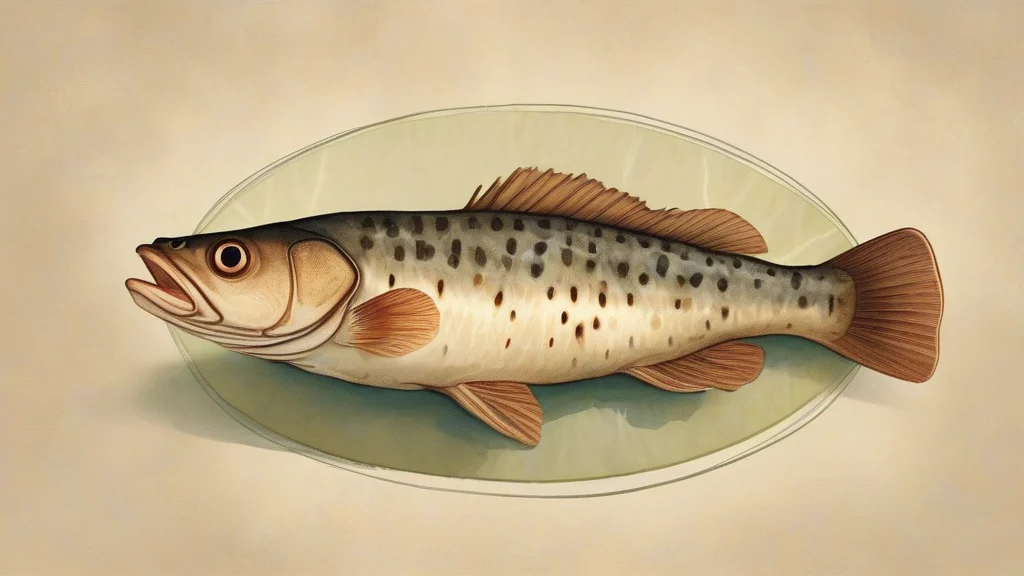
A young or small cod fish.
"Anglers measured each codling carefully before keeping it."
Often left uninflected in the plural when speaking of fish in aggregate.
An old English variety of cooking apple.
"The walled garden still produced a crop of sharp codling apples each autumn."
In 'codling moth', a moth (Cydia pomonella) whose larvae damage apples and other fruit.
"The grower set pheromone traps against the codling moth."
'Codlings' is standard for countable references; fishermen often leave it as 'codling' in aggregate contexts, similar to other fish names.
"He netted several codlings near the estuary mouth."
The codling moth earned its name not from fish but from fruit — its caterpillars tunnel into apples, making 'codling' one of the few words that swims and grows on trees.
Reviewed by Deb Chak, Editor. AI-assisted content curated by RJS Tech Solutions LLP.
Etymology of codling
Codling derives from 'cod' — a word of uncertain origin, attested in Middle English for the fish — combined with the diminutive suffix '-ling' from Old English, indicating youth or smallness. The fish sense dates back centuries in English maritime usage. The apple sense arose separately in early modern English, likely from the same suffix applied to an apple variety name, and survives chiefly in the compound 'codling moth', which was named after the apple rather than after any resemblance to fish.
Related word forms
How codling is actually used
The fish sense is chiefly British and common in fishing and culinary contexts. The apple sense is now somewhat dated but survives firmly in the compound 'codling moth'. The plural is usually 'codling' when referring to fish collectively, though 'codlings' also occurs.
Easily confused with codling
Coddling means treating someone indulgently or cooking gently in water, while codling is either a young cod fish or a variety of apple.