What does commando mean?
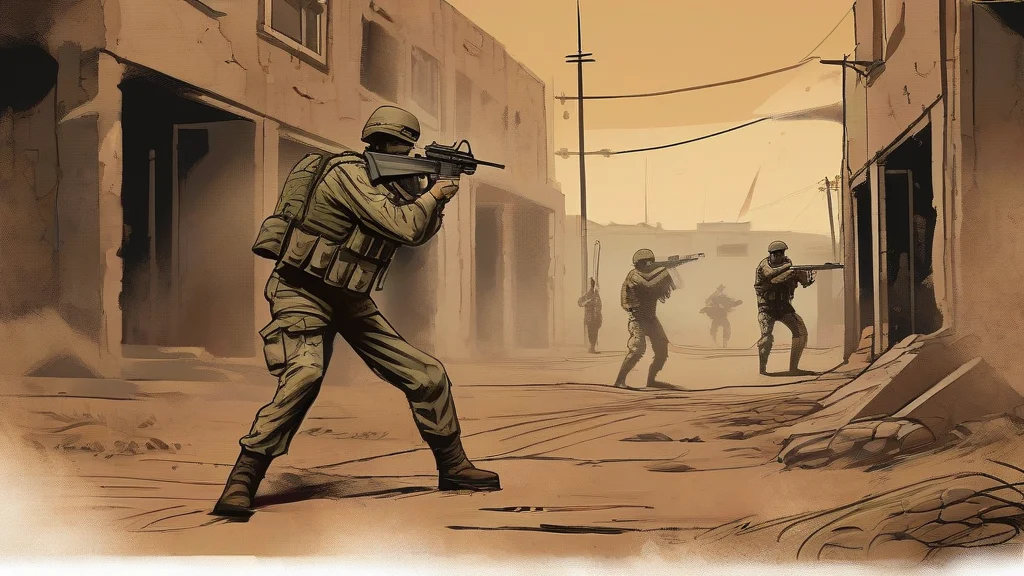
A commando is a soldier trained to carry out fast, aggressive raids and other unconventional operations, usually in small, highly mobile units. The term also denotes such a unit itself, and by extension it is applied loosely to anyone who works with unusual speed, self-reliance, or audacity. The word entered English from Afrikaans during the South African (Boer) Wars of the late nineteenth century, where kommando units of mounted farmers proved devastatingly effective against conventional British forces; impressed by their tactics, the British later raised their own commando formations in the Second World War. Today 'commando' evokes elite special forces such as Royal Marines commandos or naval commando units, and it appears frequently in phrases like 'commando raid'. There is also a well-known informal idiom, 'to go commando', meaning to wear trousers without underwear — a playful civilian borrowing that shows how thoroughly the word has escaped its military origins.
A soldier trained for rapid surprise raids and unconventional operations; also, a small unit of such soldiers.
"The commandos crossed the river before dawn and destroyed the bridge."
In military contexts the plural is usually 'commandos'; older British military style occasionally used 'commando' unchanged in the plural.
Used informally to describe wearing clothes without underwear, chiefly in the phrase 'to go commando'.
"She laughed and confessed she'd gone commando all day."
Strictly this sense functions adjectivally or within an idiom; it is informal and best avoided in formal writing.
The standard English plural adds -s. In some historical British military usage the singular form 'commando' was treated as a collective noun, so no plural was needed.
"Three commandos were decorated for the raid."
"Commando" began as a Dutch-Afrikaans word for a mobile Boer militia unit — and the Boer commandos of the Second Anglo-Boer War were so effective that Britain created its own commando forces in imitation.
Reviewed by Deb Chak, Editor. AI-assisted content curated by RJS Tech Solutions LLP.
Etymology of commando
Commando comes from Afrikaans kommando, itself borrowed from Portuguese comando, ultimately derived from the Latin verb commendare or commandare ('to commit to one's care, entrust'), which shares the root mandare ('to entrust, order') seen in English words such as mandate, demand, and recommend. The term originally described the mobile mounted militias of Boer settlers in southern Africa. It entered English during the late nineteenth century, especially through coverage of the First and Second Anglo-Boer Wars, and its modern association with elite raiding troops dates largely to the Second World War, when British forces deliberately adopted the name.
Related word forms
How commando is actually used
The word carries connotations of elite training and daring, and is often used admiringly or metaphorically outside strictly military contexts ('she ran the project like a one-woman commando operation'). The underwear-related informal sense is common in casual speech but inappropriate in formal writing.