What does concertina mean?
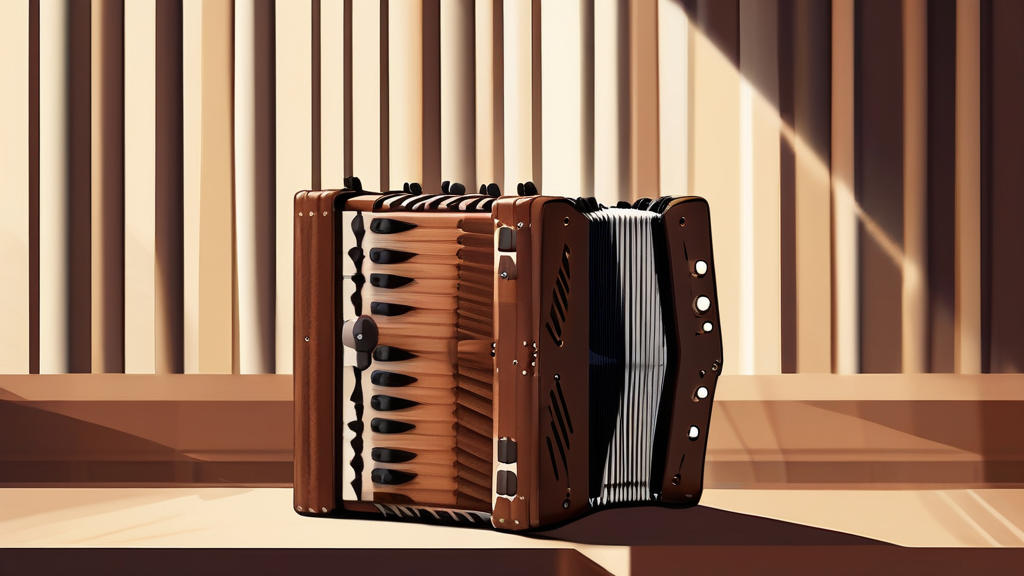
A concertina is a small, portable musical instrument belonging to the free-reed family, best known for its hexagonal body and expandable pleated bellows held between the two hands. Pressing buttons at either end while pushing or pulling the bellows causes air to flow across internal reeds, producing sound. Patented in the early nineteenth century by the English physicist Charles Wheatstone, the concertina quickly spread through popular culture, becoming especially beloved in folk music traditions — from English Morris dancing to Irish sessions and sailor's work songs. Beyond its musical meaning, the word has developed a vivid figurative use as a verb: anything that folds, collapses, or compresses into tight pleats can be said to concertina, as when a vehicle crumples in a crash or a crowd bunches together in a narrow space. This dual character — a charming folk instrument and an expressive image of folding compression — makes 'concertina' a distinctive and versatile word in modern English.
A small hexagonal musical instrument of the accordion family, with a pleated bellows worked between the hands and button keys at each end.
"She picked up her concertina and began a lively reel."
Common in folk and traditional music contexts.
To collapse or compress into folds, like the bellows of a concertina.
"The tent pole concertinaed into its carry bag."
Informal; past tense 'concertinaed'.
Regular plural; used both for multiple instruments and, figuratively, for folded structures resembling the instrument's bellows.
"The folk club owned several concertinas of different makes."
Invented in the 1820s–30s by English physicist Charles Wheatstone — the same scientist behind the Wheatstone bridge — the concertina became the soundtrack of sailors, Morris dancers, and Irish sessions.
Reviewed by Deb Chak, Editor. AI-assisted content curated by RJS Tech Solutions LLP.
Etymology of concertina
The word 'concertina' was coined in early nineteenth-century England, formed from 'concert' with the Italian-style diminutive suffix '-ina', suggesting a small instrument suited to playing in ensemble or harmony. It was introduced around the time Charles Wheatstone patented his design in the late 1820s and early 1830s. The root traces back ultimately to Latin 'concertare' and related terms underlying 'concert' and 'concerto'. Its figurative verbal use arose later, borrowing the image of the instrument's folding bellows.
How concertina is actually used
As a verb, 'concertina' is informal but well established, especially in British English; the past tense is 'concertinaed'. The instrument is strongly associated with folk traditions — English Morris dancing, Irish music, and maritime songs — giving the word a rustic, traditional connotation.
Easily confused with concertina
A concerto is an extended composition for a solo instrument accompanied by an orchestra, whereas a concertina is a small hand-held bellows instrument itself.