What does coopered mean?
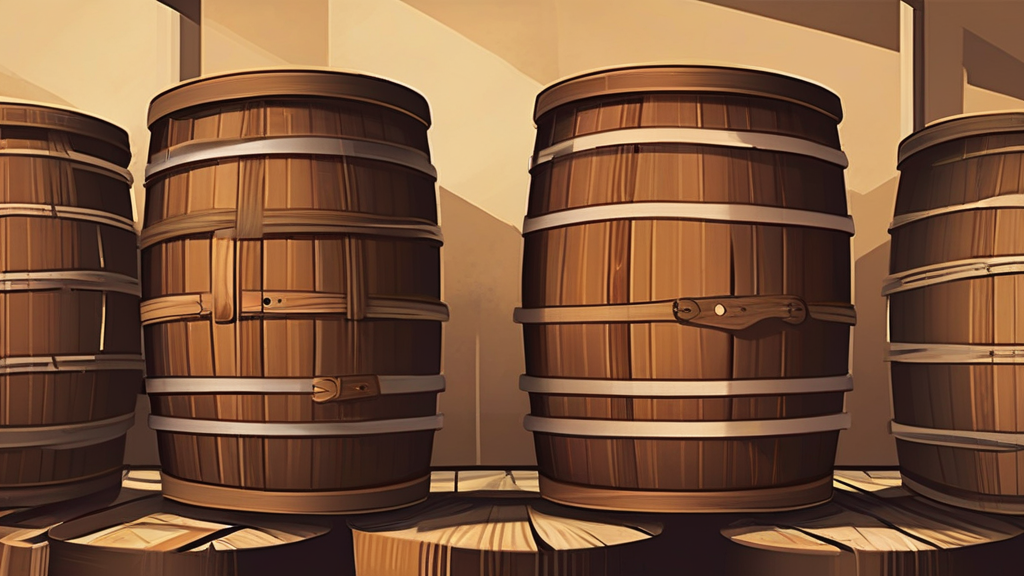
Coopered is the past participle of the verb cooper, meaning to have made or repaired wooden casks, barrels, vats, and other staved containers in the manner of a cooper, or barrel-maker. The word belongs to the vocabulary of traditional trades: before metal drums and plastic containers existed, virtually every liquid and many dry goods travelled and matured in coopered vessels, making coopers essential to brewing, distilling, shipping, and storage for centuries. In modern usage, coopered most often appears in heritage and craft contexts — descriptions of whisky or wine barrels coopered by hand, museum exhibits, or accounts of the dying art of the cooper's workshop. It also surfaces in furniture and design writing, where coopered describes components built of curved, joined pieces resembling barrel staves, such as a coopered chair back. The word evokes skilled handwork, durability, and tradition rather than mass production, giving it a distinctly artisanal flavour wherever it appears.
Simple past and past participle of cooper: to make or repair barrels, casks, vats, and other staved wooden vessels.
"Every cask in the cellar was coopered by a master craftsman."
Most often encountered in historical, distilling, brewing, and traditional-craft contexts rather than casual conversation.
Describing a structure or component made of curved, stave-like pieces joined in the manner of a coopered barrel.
"The desk has an elegant coopered front of gently bowed drawers."
Found mainly in antique, furniture, and architectural description.
Before steel and plastic took over, entire industries — wine, beer, gunpowder, even whale oil — depended on the hands of coopers, the craftsmen behind every coopered cask.
Reviewed by Deb Chak, Editor. AI-assisted content curated by RJS Tech Solutions LLP.
Etymology of coopered
The word traces back through the verb cooper, which entered English from Middle Dutch kūper, meaning a barrel-maker; Dutch and Flemish craftsmen were renowned for the trade and carried it into England. Some scholars connect the term ultimately to Latin cupa, meaning a tub or vat, which also gave English the words cup and cupola. The craft itself is ancient — staved wooden vessels were made throughout medieval Europe and long before — and coopering became a formal guild profession by the late Middle Ages. The past participle coopered simply follows standard English verb formation on that occupational root.
Related word forms
How coopered is actually used
"Coopered" is chiefly used as a verb form in historical, craft, and specialist woodworking contexts; it carries connotations of traditional craftsmanship and is uncommon in everyday speech. The related adjective sense describing coopered furniture appears mostly in antique and design writing.
Easily confused with coopered
"Cooped" means confined in a small enclosed space (as in 'cooped up'), while "coopered" refers to the craft of making or repairing wooden barrels.