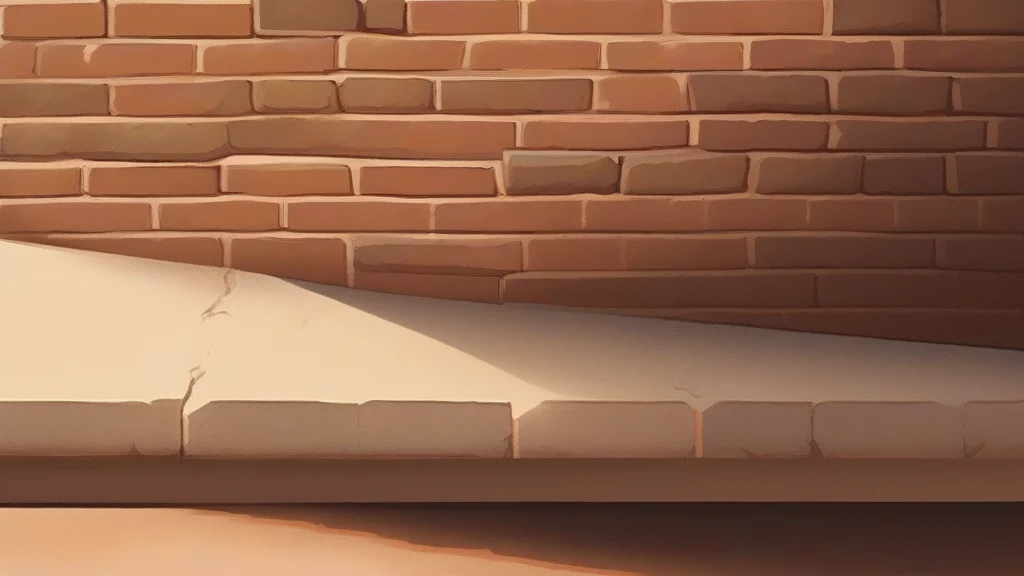
What does corbelling mean?
Corbelling is a masonry technique in which each successive course of brick or stone projects slightly beyond the course beneath it, so that a wall can step gradually outwards and carry an overhanging load without beams or buttresses. In skilled hands, repeated corbels can even close a gap entirely, forming a 'corbelled arch' or vault — a method ancient builders used centuries before the true arch was perfected. The word appears most often in architectural history, archaeology, and conservation reports, describing features from medieval chimney flues and Scottish tower houses to Neolithic beehive huts and Mayan temples. It is a technical term rather than everyday vocabulary, but its meaning is transparent once seen: a staircase-like progression of stones, each leaning a little further into space than the last, held in place by the weight of the masonry above.
nounA masonry construction technique in which successive courses of stone or brick project progressively beyond the one below, allowing a wall to support an overhanging structure such as a cornice or arch without external bracing.
- The technique of building with progressively projecting masonry courses so that each course steps outward beyond the one beneath it, enabling overhangs and arches without true arch support.
"The medieval tower was crowned with corbelling that flared outward at the top like a stone crown."
"The chimney breast was finished with decorative corbelling that supported the projecting upper storey."
"Ancient builders across Ireland and Greece relied on corbelling to roof their stone chambers long before true arches were known."
Corbelled walls were built by simply laying each course slightly further out than the last — no glue, no steel, just gravity and patience, used in everything from Irish beehive huts to Mayan vaults.
Reviewed by Deb Chak, Editor. AI-assisted content curated by RJS Tech Solutions LLP.
Etymology of corbelling
Corbelling derives from 'corbel', which entered English from Old French 'corbel', a diminutive of 'corb' meaning raven, itself from Latin 'corvus'. The name alludes to the corbel's shape, likened to a crow's or raven's beak projecting from a wall. Related cognates include Scots 'corbie' (raven) and the seabird name 'cormorant'. The term has been used in English architectural writing since the Middle Ages.
Related word forms
How corbelling is actually used
Corbelling is primarily a technical term of architecture, archaeology, and building conservation; it appears rarely outside those contexts and carries a neutral, formal register. The spelling 'corbelling' is standard British usage, while American texts sometimes use 'corbaling', though both are understood.
Easily confused with corbelling
Cobbling means making or repairing shoes or rough paving, whereas corbelling is the architectural technique of projecting masonry courses.