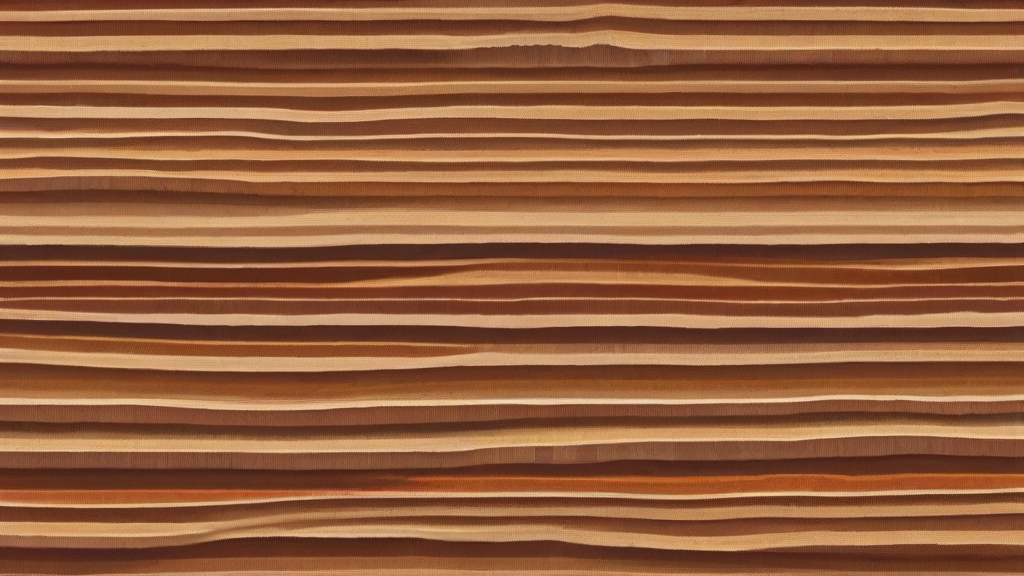
What does corduroyed mean?
Corduroyed is an adjective describing something marked with parallel ribs or ridges, in imitation of corduroy, the durable cotton fabric distinguished by its raised wales. It is most often applied figuratively to textured surfaces — a face corduroyed with wrinkles, a field corduroyed by the plough — lending descriptive writing a vivid, tactile quality. The word also preserves a literal historical sense: in North America during the eighteenth and nineteenth centuries, settlers 'corduroyed' muddy tracks by laying logs side by side across them, producing bumpy but passable roads through swamps and forests. Both senses derive from the noun corduroy, whose own origin is debated but is usually explained as a blend of 'cord' and a coarse cloth once called duroy. Today the word appears mainly in literary description and historical accounts rather than casual conversation.
adjectiveHaving a ribbed or ridged surface like corduroy fabric; also, paved or reinforced with logs laid side by side across a road or track.
- Having a ribbed or ridged texture resembling corduroy cloth, especially of skin, fields, or surfaces marked by parallel lines.
- (Of a road or track) surfaced or reinforced with logs laid transversely side by side.
"The old logging trail was still corduroyed with rotting cedar logs where the marsh had never fully drained."
"His cheeks were corduroyed with deep smile lines after decades of laughing."
"Pioneers corduroyed the swamp crossing by laying logs shoulder to shoulder across the mud."
Before asphalt, frontier roads were literally 'corduroyed' — made of logs laid side by side like the ribs of the fabric they're named after.
Reviewed by Deb Chak, Editor. AI-assisted content curated by RJS Tech Solutions LLP.
Etymology of corduroyed
Corduroyed derives from the noun corduroy, combined with the adjectival suffix -ed. The origin of corduroy itself is uncertain, though it is commonly explained as English 'cord' plus 'duroy', the name of a coarse woollen cloth, with folk-etymological association of French 'corde du roi' ('cloth of the king'). The word entered English in the late eighteenth century for the ribbed fabric, and the derived form corduroyed came to describe both ribbed textures and log-surfaced roads.
Related word forms
How corduroyed is actually used
The figurative sense describing ribbed textures (especially of skin or ploughed land) is more common in literary and descriptive writing than in everyday speech. The literal road-building sense is chiefly historical, associated with 18th–19th century North American frontier and logging contexts.
Easily confused with corduroyed
Corduroy is the noun naming the ribbed cotton fabric (or the verb meaning to pave with logs), while corduroyed is its past-tense and adjectival form describing something that has been given that ribbed or log-laid character.