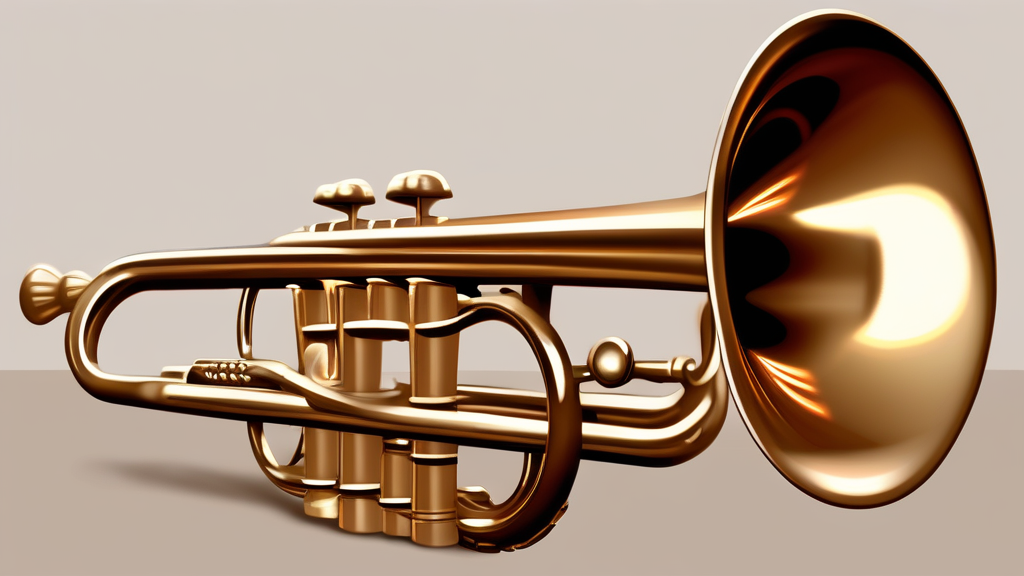
What does cornet mean?
A cornet is a brass wind instrument closely related to the trumpet but distinguished by its largely conical bore, which gives it a warmer, rounder, and slightly more mellow tone than its brighter sibling. Developed in France in the early nineteenth century, the cornet quickly found favour in military bands, dance orchestras, and — most enduringly — brass bands, where the principal cornet occupies the position of leadership once held by first violinists. Because of its agility and expressive quality, the cornet was also a favourite of early jazz pioneers before the trumpet largely displaced it. Beyond music, the word has other lives: in Britain, a cornet is a cone-shaped paper wrapper for ice cream or sweets, and in historical usage it denoted the lowest commissioned officer rank in cavalry regiments. Careful writers distinguish it from the similarly spelled 'coronet', a small crown.
nounA cornet is a brass wind instrument similar to a trumpet but with a more conical bore and a mellower tone. The word also denotes a paper cone for holding sweets or ice cream, and historically referred to the lowest commissioned officer rank in cavalry regiments.
- A valved brass musical instrument resembling a trumpet but with a conical bore and softer, more mellow tone.
- A cone-shaped paper wrapper for holding ice cream or sweets (British usage).
- (Historical) The lowest rank of commissioned officer in British cavalry regiments, abolished in the 19th century.
"The jazz soloist lifted his cornet and began to play a soft, bluesy melody."
"She joined the brass band as principal cornet at just fourteen."
"The children bought a cornet each from the seaside kiosk."
The plural follows regular English patterns: one instrument or cone is a cornet, two or more are cornets.
"The shop sold vanilla cornets to every child on the beach."
Before it was an instrument, 'cornet' named the youngest — and lowest-paid — officer in a British cavalry regiment, a rank that vanished from the army in 1871.
Reviewed by Deb Chak, Editor. AI-assisted content curated by RJS Tech Solutions LLP.
Etymology of cornet
The word 'cornet' comes from the Latin 'cornu', meaning horn, via Old French 'cornet', a diminutive form meaning 'little horn'. It entered English in the fourteenth century, originally describing any horn-like object, including the pointed headdress known as a 'cornet' worn by women in the medieval period. When the valved brass instrument emerged in France around the 1820s and 1830s, it inherited this name because of its horn-like shape. Related words sharing the same Latin root include 'corner', 'cornucopia', and 'coronet'.
How cornet is actually used
In everyday speech, 'cornet' most often refers to the musical instrument, especially within brass bands, where the instrument holds a prominent role in British tradition. In British English, 'cornet' also commonly means an ice-cream cone, though 'cone' is increasingly preferred. The military sense is now purely historical. The word should not be confused with 'coronet', which refers to a small crown.
Easily confused with cornet
A coronet is a small crown worn by nobility, whereas a cornet is either a brass instrument or a cone-shaped container.
The trumpet has a mostly cylindrical bore producing a brighter, more piercing sound, while the cornet's conical bore gives it a warmer, rounder tone.