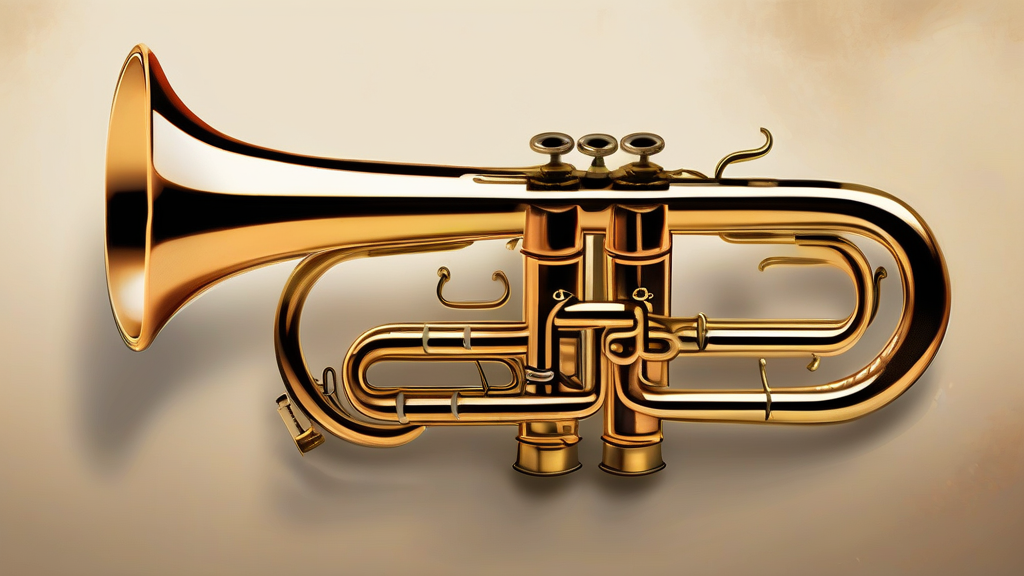
What does cornett mean?
The cornett is a wind instrument that flourished in Europe from roughly the sixteenth to the mid-seventeenth century. Despite its misleading name, it has no connection to the brass cornet: it is carved from wood or ivory, usually in a gently curved shape, covered with finger holes like a recorder, and fitted with a small cup-shaped mouthpiece like a trumpet's. This hybrid design gave the cornett a remarkably flexible, human-voice-like tone, making it a favourite for doubling choral parts and for elaborate solo playing in churches and courts, especially in Italy and German-speaking lands. Composers such as Claudio Monteverdi wrote prominent parts for it. By the late Baroque era the instrument had fallen out of use, but it has been revived by the early music movement, and virtuoso performers once more play its demanding repertoire. Its name derives ultimately from Latin cornu, meaning horn.
nounA Renaissance and Baroque wind instrument made of wood or ivory, curved like a horn and played through a cup-shaped mouthpiece, producing a soft, vocal tone; it is unrelated to the modern brass cornet despite the similar name.
- A curved, finger-holed wooden wind instrument of the Renaissance and Baroque periods, sounded with a cup-shaped mouthpiece and noted for its clear, vocal quality.
"The ensemble's performance featured a virtuosic cornett part reconstructed from early seventeenth-century Venetian music."
"The cornett's limpid tone floated above the choir during the polychoral motet."
"Early music specialists spent years mastering the notoriously difficult cornett."
Both 'cornetts' and the Italian plural 'cornetti' are accepted, the latter especially in scholarly or early-music contexts.
"The recording features two cornetts and a full sackbut consort."
Despite its name, the cornett isn't brass at all — it's a leather-wrapped wooden instrument whose haunting, voice-like sound was prized across Renaissance Europe.
Reviewed by Deb Chak, Editor. AI-assisted content curated by RJS Tech Solutions LLP.
Etymology of cornett
The cornett takes its name via French cornet, a diminutive of corne meaning horn, ultimately derived from the Latin cornu. The same Latin root produced English words such as unicorn and cornucopia, as well as the closely related brass instrument name cornet. The Italian form cornetto, literally little horn, is frequently used interchangeably in historical sources and modern scholarship.
Related word forms
How cornett is actually used
The word is used almost exclusively in the context of early music and historical performance practice. The Italian form 'cornetto' is often preferred in scholarly writing, and players are called 'cornettists'. It should never be treated as a variant spelling of 'cornet'.
Easily confused with cornett
A cornet is a brass instrument resembling a small trumpet, whereas the cornett is an older wooden wind instrument played with a cup mouthpiece.