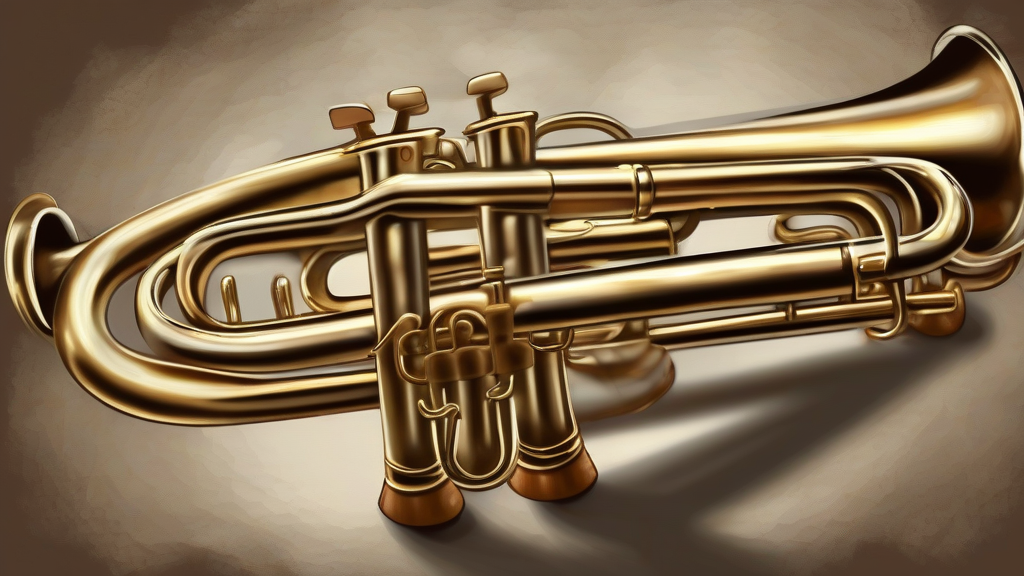
What does cornopean mean?
Cornopean is a term from organ terminology denoting a reed stop of powerful, trumpet-like voice, normally pitched at 8 feet and found on the Great manual of pipe organs. The name arose in nineteenth-century Britain as a rendering of the French 'cornet-à-pistons', the valved cornet then known colloquially among English players as the cornopean; organ builders borrowed the word when they sought a reed stop evoking that instrument's bright, penetrating tone. In practice, invoking the Cornopean signals a demand for weight and brilliance: it is drawn for climactic verses, festive voluntaries, and moments where the organ must carry over congregational singing. Today the word belongs chiefly to the vocabulary of organists, builders, and enthusiasts of Victorian instruments, though it survives in the specifications of many restored church and town-hall organs. Its etymological kin — cornet, coronet, cornucopia — all descend ultimately from the Latin 'cornu', meaning horn.
nounA reed stop on a pipe organ of powerful, trumpet-like tone, typically voiced at 8-foot pitch on the Great division and popular in Victorian-era instruments.
- An organ reed stop of loud, trumpet-like tone, usually at 8-foot pitch.
- Historically, the name given in Britain to the cornet-à-pistons (valved cornet), from which the organ stop takes its name.
"The Victorian rebuild gave the organ a bold new Cornopean that rings out over full hymn accompaniments."
"Pull out the Cornopean for the final verse so the hymn carries to the back of the nave."
"In his specification for the town-hall instrument, the builder placed a full-length Cornopean on the Great alongside the Trumpet."
Pluralised when an organ contains more than one such stop, though most instruments have only one.
"Both manuals carried cornopeans of differing scales."
When Victorians couldn't say 'cornet-à-pistons' fast enough, they shortened it to 'Cornopean' — and the name stuck to an entire family of organ pipes.
Reviewed by Deb Chak, Editor. AI-assisted content curated by RJS Tech Solutions LLP.
Etymology of cornopean
The word traces back through nineteenth-century British usage of the French 'cornet-à-pistons', which English musicians anglicised as 'cornopean'. Organ builders adopted this name for a reed stop designed to imitate that valved brass instrument's tone. All these terms share a deeper ancestry in the Latin 'cornu' ('horn'), making the Cornopean a distant cousin of the cornet, coronet, and cornucopia.
How cornopean is actually used
Cornopean is a specialist term encountered almost exclusively in organ building, organ recital programmes, and historical discussions of Victorian church and concert-hall organs. It carries a connotation of full, brassy grandeur rather than delicacy.
Easily confused with cornopean
The cornet is a small valved brass instrument played by mouth, whereas a Cornopean is an organ stop whose name derives from the cornet's British nickname but exists only as a set of organ pipes.
A cornucopia is the horn-shaped emblem of abundance, sharing only the Latin 'horn' root with the Cornopean organ stop.