What does country mean?
A country is a distinct territorial body — typically a nation with its own government, borders, and population — though the word also describes land of a particular character, such as hill country or wine country. It ranks among the most fundamental words in political and everyday speech: we use it to discuss travel, citizenship, news, sport, and identity alike. The plural 'countries' is standard. Beyond its geographic meaning, 'country' can denote a nation's people collectively, as when we say a country mourns or celebrates. In British usage it frequently evokes the countryside — rural, open land away from towns — a sense less prominent in American English, where 'countryside' tends to fill that role. Related forms include 'countrywide' and 'countryman'. The word carries broadly neutral connotations but is often invested with strong emotional weight, tied to belonging, patriotism, and home. Distinguish it from 'county', which is merely an administrative subdivision within a country.
A nation with its own government, occupying a particular territory.
"She has lived in three different countries over the past decade."
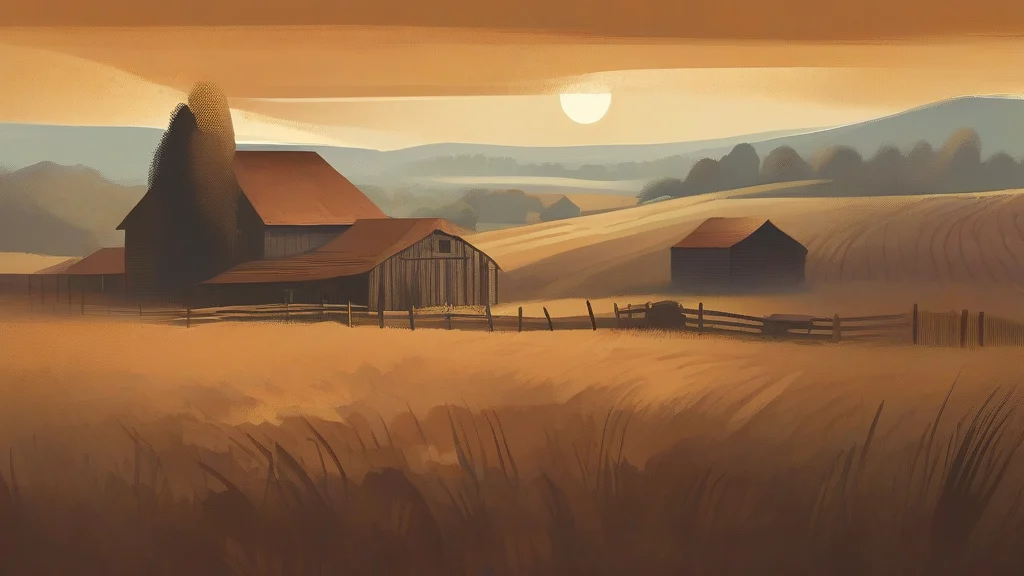
Land or territory of a specified type, especially rural or open land.
"The hikers crossed miles of wild, unpopulated country."
The people of a nation considered collectively.
"The whole country watched the final match with bated breath."
Standard plural; used when speaking of multiple nations or regions.
"The treaty was signed by twelve countries across four continents."
The word 'country' comes from the Latin 'contra' — meaning 'opposite' or 'against' — because the land 'lying opposite' you became the land around you.
Reviewed by Deb Chak, Editor. AI-assisted content curated by RJS Tech Solutions LLP.
Etymology of country
'Country' entered English in the Middle Ages via Old French 'contreé', derived from Vulgar Latin '(terra) contrata', meaning 'land lying opposite' or 'land spread out before one', from Latin 'contra', 'against' or 'opposite'. Its earliest sense referred to a tract of land or region rather than a sovereign state; the political sense of an independent nation developed later. Cognates appear in Romance languages such as Italian 'contrada' and Spanish 'contorna'/'contrada'. The related term 'countryside' arose later to emphasize the rural-land sense.
Related word forms
How country is actually used
In British English, 'country' can refer to the countryside specifically, whereas in American English 'countryside' is more common for that sense. When referring to a nation as a political entity, 'state' is more formal. Note that in the UK, England, Scotland, Wales, and Northern Ireland are often called countries even though they form a single sovereign state.
Easily confused with country
A county is an administrative division within a country, not an independent nation.