What does crackle mean?
"Crackle" describes a distinctive kind of sound: a rapid succession of small, sharp, snapping noises rather than one loud report. As a verb, it applies most naturally to burning wood, dry leaves underfoot, radio static, and electrical discharges, giving scenes an auditory texture that writers use to evoke warmth, tension, or unease. As a noun, a crackle is either such a sequence of sounds or, in ceramics and painting, a deliberate network of fine cracks known as crackle glaze, prized in East Asian pottery and reproduced in modern decorative finishes. The word carries strong sensory connotations — cozy when attached to hearth fires, ominous when attached to distant gunfire or a failing phone line. Derived forms include "crackly," describing textures or recordings full of such noise, and "crackling," used both adjectivally and as a culinary term for crisp roasted pork skin. Its vividness and precision make it a favorite of descriptive prose.
To make or emit a series of short, sharp, slight cracking sounds.
"The bonfire crackled in the still autumn air."
Frequently used of fire, static, and electrical sounds; figuratively, it can describe excitement or energy ('the room crackled with anticipation').
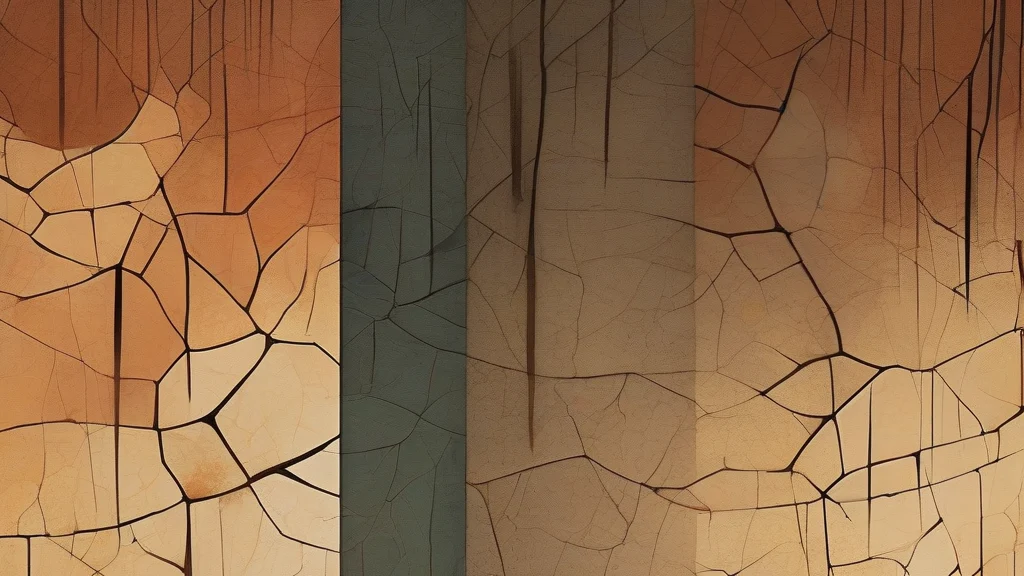
A series of small sharp cracking sounds, or a network of fine cracks in a surface such as ceramic glaze.
"He heard the faint crackle of static before the broadcast resumed."
The plural typically refers to multiple instances of the sound or to individual items bearing crackle glaze.
"The recording was marred by the crackles of an old vinyl pressing."
That cozy 'crack' in a crackling fire is the same tiny explosion of trapped moisture and sap that gave us the word — nature's own sound effect.
Reviewed by Deb Chak, Editor. AI-assisted content curated by RJS Tech Solutions LLP.
Etymology of crackle
"Crackle" is a frequentative formation on the verb "crack," using the -le ending common in English to denote repeated action (compare "sparkle" from "spark" and "wriggle" from "wrigg-"). It arose in English in the early modern period, by the late sixteenth century, as speakers sought a word for the repeated small cracks implied by "crack." It shares its root entirely with the native Germanic verb "crack," which itself echoes imitative words found across Germanic languages.
Related word forms
How crackle is actually used
Common in both everyday and literary English. The verb often appears with fires, radio static, and electrical sounds; the noun is frequent in phrases like 'a crackle of static' or 'the crackle of leaves'. 'Crackleware' or 'crackle glaze' refers specifically to ceramics with intentional crack patterns.
Easily confused with crackle
A cackle is a loud, harsh laugh (or a hen's clucking), while a crackle is a series of small sharp cracking sounds.