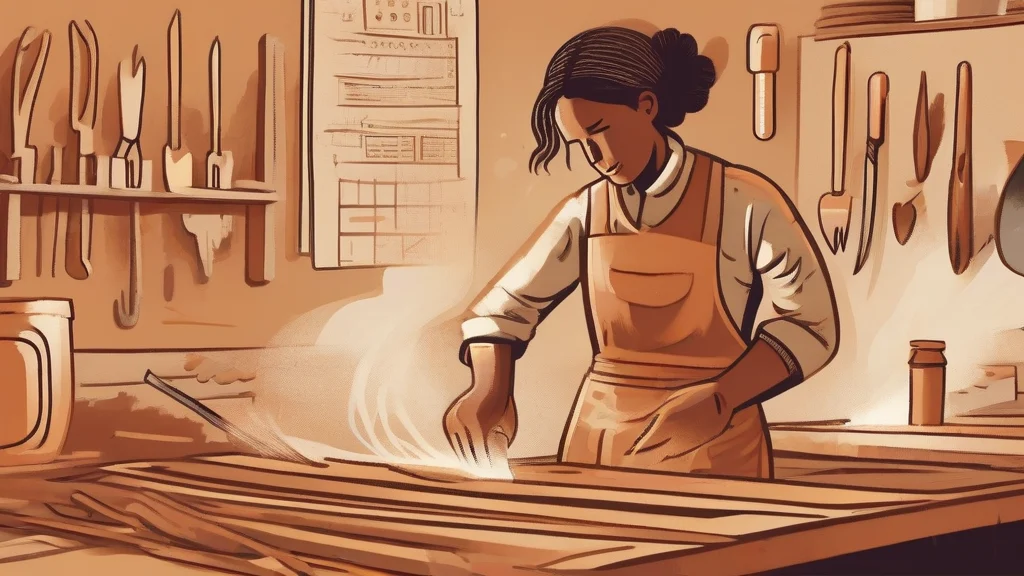
What does craftspeople mean?
Craftspeople are people who possess skill in a manual art or trade, producing useful or decorative objects by hand or with hand tools — potters, weavers, woodcarvers, glassblowers, and the like. The word functions as the plural of 'craftsperson', which itself emerged in the late twentieth century as a gender-neutral alternative to the traditional term 'craftsmen'. As a result, 'craftspeople' is strongly associated with modern, inclusive usage while retaining all the positive connotations of the older word: mastery, patience, pride in one's work, and often a connection to traditional methods passed down through generations. It appears frequently in contexts celebrating heritage trades, artisan markets, galleries, and discussions about preserving endangered skills in an age of mass production. Writers choose it both for its accuracy and for its tone — it honors labor that machines cannot replicate, framing its subjects as custodians of technique as much as producers of goods.
nounSkilled workers who make things by hand or with specialized tools; the plural of craftsperson, used as a gender-neutral alternative to 'craftsmen'.
- Plural of craftsperson: people skilled in a manual art or trade who make objects by hand, such as potters, weavers, carpenters, or glassblowers.
"The market hall was filled with local craftspeople selling pottery, woven textiles, and carved wooden bowls."
"The gallery showcases work by craftspeople from across the region."
"Generations of craftspeople passed down their techniques for dyeing silk."
'Craftspeople' is itself a plural noun; it has no separate plural form. The singular is 'craftsperson'.
"Hundreds of craftspeople gathered at the annual folk festival."
'Craftspeople' only became widespread in the late twentieth century, as writers sought a neutral replacement for 'craftsmen' — making it one of English's youngest everyday words.
Reviewed by Deb Chak, Editor. AI-assisted content curated by RJS Tech Solutions LLP.
Etymology of craftspeople
The word combines 'craft', from Old English 'cræft' meaning strength, skill, or trade, with 'people', from Latin 'populus' via Old French 'peuple'. While 'craftsman' has been attested since the Middle English period, the compound 'craftsperson' and its plural 'craftspeople' are recent coinages, arising during the late twentieth-century movement toward gender-neutral occupational terms. Its closest relatives are 'craftsmanship' and 'handicraft', which share the same Germanic root.
Related word forms
How craftspeople is actually used
Used almost exclusively in the plural; the singular form is 'craftsperson'. It arose as a deliberately inclusive alternative to 'craftsmen' and carries a respectful, appreciative connotation of skill and tradition.
Easily confused with craftspeople
'Craftsmen' is the older, male-specific plural; 'craftspeople' is its gender-neutral equivalent covering makers of any gender.