
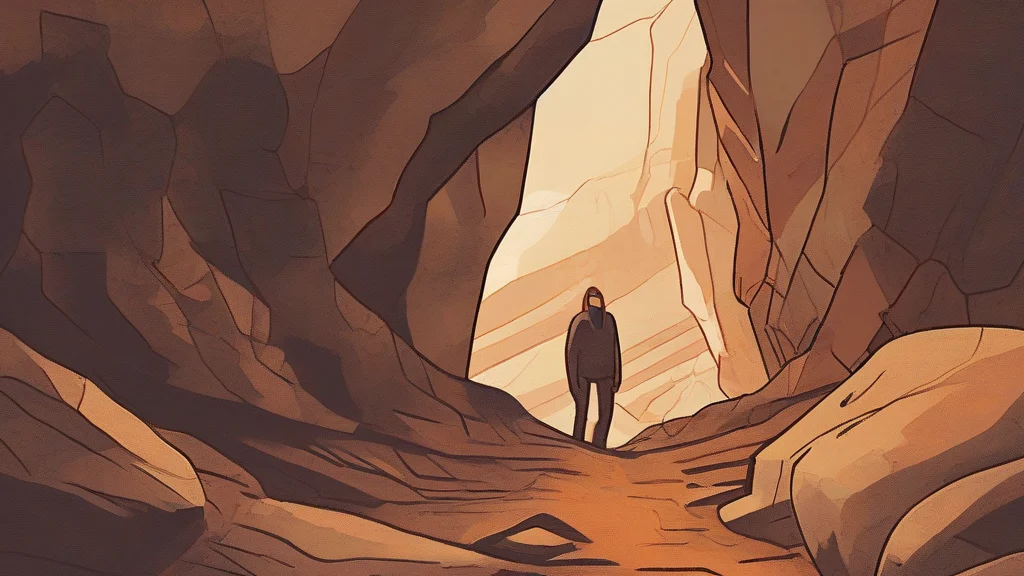
What does craggiest mean?
Craggiest is the superlative form of the adjective craggy, meaning the most rugged, rocky, or uneven in surface or outline. It is used chiefly to describe landscapes — mountain peaks, coastlines, cliffs, and outcrops where bare rock dominates — as in the craggiest reaches of a highland range. By extension, it can describe human features, particularly a face marked by deep lines, prominent angles, and weathered texture, often with an admiring connotation suggesting character and endurance rather than mere age. The word derives from crag, a noun for a steep rugged rock, which entered English from Celtic sources with possible Old Norse influence. Because it is a comparative superlative, it presupposes a set of things being compared and suits vivid, concrete description. It is most at home in travel writing, geography, and literary prose.
adjective (superlative of 'craggy')Most craggy; having the most rugged, rocky, and uneven surface or outline. Also used figuratively to describe a face marked by deep lines and angular features.
- Having the most rugged, steep, rocky terrain or outline (literal, of landscape)
- Having the roughest, most lined and angular facial features (figurative)
"They finally reached the lighthouse perched on the island's craggiest promontory."
"The trail to the summit passes over the craggiest stretch of the entire mountain range."
"In his later years, the actor's craggiest looks became his signature on screen."
The word 'crag' itself is a mystery — it wandered into English from Celtic languages, possibly via Old Norse, and no one can pin down its exact birthplace.
Reviewed by Deb Chak, Editor. AI-assisted content curated by RJS Tech Solutions LLP.
Etymology of craggiest
Craggiest is the superlative of craggy, formed with the suffix -iest. Craggy combines the noun crag — a steep, rugged rock or cliff — with the adjectival suffix -y. The noun crag entered English in the Middle English period, borrowed from a Celtic source such as Welsh craig or Irish carraig, likely reinforced by Old Norse. Related forms appear across the Celtic languages, making crag one of the words that preserves Britain's pre-Germanic linguistic layer.
Related word forms
How craggiest is actually used
As a superlative, 'craggiest' implies comparison among three or more things and is less common than the base form 'craggy'. It appears mostly in descriptive travel writing and nature prose. The figurative sense describing faces is informal to neutral in register.
Easily confused with craggiest
'Craggiest' means most rugged or rocky, while 'groggiest' means most dazed, weak, or unsteady.