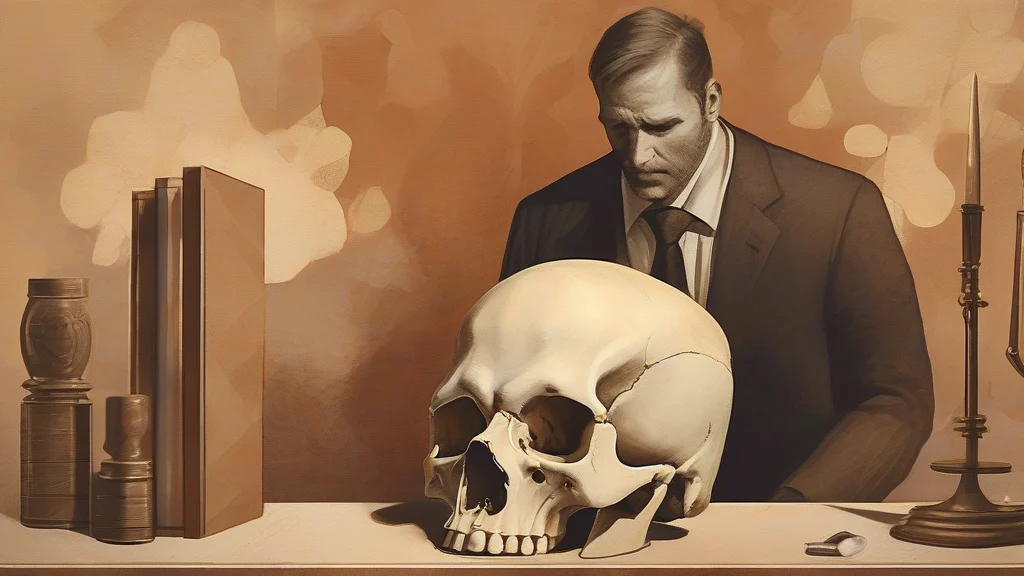
What does craniologist mean?
A craniologist is a person who studies the skull, particularly one associated with craniology — the historical discipline that treated skull size and shape as indicators of mental capacity and character. Flourishing mainly in the nineteenth century, craniologists measured heads with calipers, compiled vast collections of specimens, and often claimed that variations in cranial form explained differences in intelligence or temperament between individuals and populations. The field overlapped closely with phrenology, which read the skull's surface bumps for personality traits, and both are now regarded as pseudosciences built on unfounded assumptions. Today the word appears almost exclusively in historical or academic discussion, describing the practitioners of this once-respected but ultimately discredited pursuit. Its modern descendants are legitimate scientists such as craniometrists and physical anthropologists, though these terms are preferred precisely because they lack the word's dated and tainted associations.
nounA craniologist is a person who studies or measures the skull, especially one who practises or advocates craniology — the (now largely discredited) study of skull shape as an indicator of mental faculties and character.
- A practitioner or student of craniology, the study of skull form, especially as historically linked to theories linking head shape to character or intelligence.
- More generally, anyone engaged in the scientific measurement or anatomical study of the skull (craniometry).
"The Victorian craniologist filled his cabinet with plaster casts, convinced that each bump of the skull revealed its owner's temperament."
"Nineteenth-century craniologists collected hundreds of skulls, convinced that cranial capacity held the key to intelligence."
"As a trained craniologist, she could identify subtle differences in skull morphology that most anatomists would overlook."
Standard plural formation for a noun ending in -ist.
"Early craniologists believed that skull measurements could reveal fundamental truths about human nature."
Craniologists once ranked humanity by measuring skulls with calipers — a science so confidently wrong that it helped launch both anthropology and its most famous cautionary tale.
Reviewed by Deb Chak, Editor. AI-assisted content curated by RJS Tech Solutions LLP.
Etymology of craniologist
Craniologist derives from Greek 'kranion', meaning skull or the upper part of the head, combined with the '-logy'/'-logist' suffix pair from Greek 'logos' (word, study) indicating a person who studies something. The term arose in the early nineteenth century alongside craniology and craniometry, when European scholars began systematically measuring skulls. It shares its Greek root with words like 'cranium' and 'cranial'.
Related word forms
How craniologist is actually used
The term is largely historical. It carries connotations of pseudoscience because craniology was entangled with phrenology and with now-rejected racial typologies of the nineteenth century. In modern contexts it is used mainly when discussing the history of science or anthropology.
Easily confused with craniologist
A phrenologist specifically reads the bumps and contours of the skull to deduce personality traits, while a craniologist more broadly studies or measures the skull itself; in practice the two terms overlapped heavily in nineteenth-century usage.