What does crepe mean?
Crepe is a word with two well-established meanings. As a textile term, it denotes a thin, lightweight fabric characterised by a distinctive pebbled or crinkled surface, produced by using tightly twisted yarns or special weaving techniques; it has long been prized in fashion for garments that drape gracefully without clinging. A heavier rubber-soled form gives its name to 'crepe' shoes. As a culinary term — usually written with the French accent as 'crêpe' — it refers to a very thin pancake made from a simple batter of flour, eggs, and milk, cooked quickly in a shallow pan and served folded or rolled around sweet or savoury fillings, from the classic lemon-and-sugar version to the flambéed crêpes Suzette. The word derives from the French 'crêpe', ultimately tracing back to the Latin 'crispus', meaning curled or wrinkled, which also gives English the word 'crisp'. Both senses share the notion of a delicately puckered or rippled surface.
A thin, light fabric with a wrinkled or crinkled surface, used especially for clothing and decoration.
"Her black crepe shawl draped elegantly over her shoulders."
In fashion contexts crepe suggests elegance and fluid drape; historically, black crape carried strong associations with mourning.
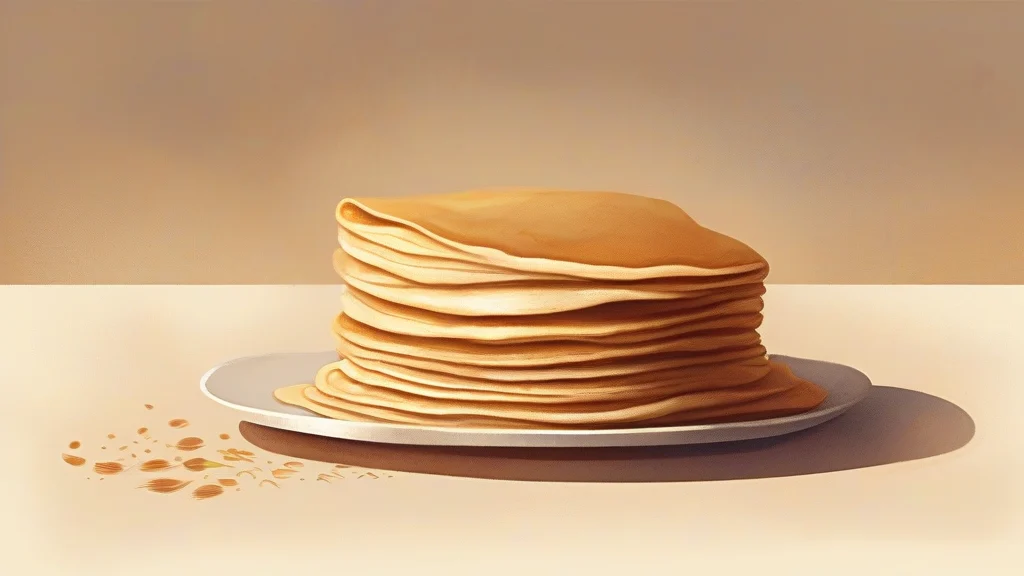
A very thin pancake, of French origin, made from a light batter and served with sweet or savoury fillings.
"For breakfast we had crêpes filled with strawberries and cream."
Often spelled 'crêpe' with a French accent in menus; the plural 'crêpes' is conventional in culinary use.
The plural is simply formed by adding -s; in culinary contexts the accented form 'crêpes' is widely preferred.
"The café serves sweet crêpes on weekends."
The same word names both what you wear to a funeral and what you drown in Nutella at a Paris street stall.
Reviewed by Deb Chak, Editor. AI-assisted content curated by RJS Tech Solutions LLP.
Etymology of crepe
Crepe entered English from French 'crêpe' in the late 18th century as the name of the crinkled fabric, and was later extended to the similarly textured French pancake. The French word itself descends from the Latin 'crispus', meaning 'curled, wrinkled, or wavy', the same root that yields the English word 'crisp'. The related spelling 'crape' arose as a variant, particularly associated with the black silk worn as a sign of mourning.
Related word forms
How crepe is actually used
Pronunciation differs notably by region: Americans say /kreɪp/ (rhyming with 'drape'), while Britons typically say /krɛp/. In culinary contexts the spelling is often given the French accent as 'crêpe', and the plural 'crêpes' is standard on menus. The fabric sense carries connotations of elegance in fashion, but also of mourning in older usage via its association with black crape.
Easily confused with crepe
Crape is a variant spelling of crepe referring specifically to the fabric — especially the crinkled black silk traditionally used for mourning — while crepe also commonly refers to the thin pancake.