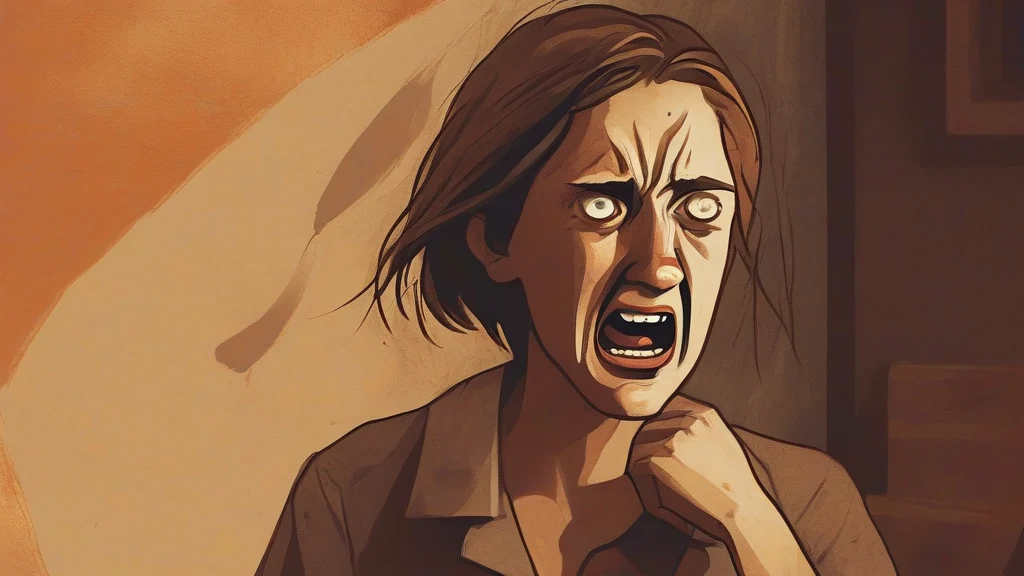
What does cringing mean?
Cringing is the present participle of the verb 'to cringe', describing an instinctive shrinking of the body or face in response to fear, pain, disgust, or humiliation. Historically it carried a strong physical meaning — cowering before a threat or grovelling before a superior — and that older sense survives in phrases about people cringing in terror or servility. In modern everyday usage, however, cringing is far more often emotional than bodily: we cringe at awkward silences, bad karaoke, or our own past social missteps, feeling a flush of secondhand embarrassment so vivid it seems almost physical. This blend of the visceral and the social makes the word unusually expressive, capturing a reaction that is felt in the body yet caused by the mind. Its cultural reach has expanded further still, with 'cringe' adopted as standalone slang for anything painfully uncool, and derivatives such as 'cringeworthy' in regular use across British and American English.
Present participle of 'cringe': to shrink back or cower in fear, pain, or disgust, or to feel intense embarrassment.
"The audience was visibly cringing during the comedian's ill-judged jokes."
Often used with 'at', 'with', or 'in': cringing at the sight, cringing with shame.
The act or instance of shrinking back in fear or servility, or of feeling acute embarrassment.
"His constant cringing in front of his boss made his colleagues uncomfortable."
Used chiefly as a gerund; it has no plural in ordinary usage.
The same word that once described soldiers grovelling before a king now describes your face when you remember an embarrassing text you sent in 2015 — 'cringe' even became internet slang for anything painfully uncool.
Reviewed by Deb Chak, Editor. AI-assisted content curated by RJS Tech Solutions LLP.
Etymology of cringing
'Cringing' derives from the Old English verb 'cringan', meaning to yield, fall, or curl up, which belongs to a family of Germanic words connected with bending and turning; it is distantly related to words such as 'crank'. The verb appears in early medieval English texts describing submission and physical collapse, and by the sixteenth and seventeenth centuries it firmly meant shrinking back in fear or servility. The modern emotional sense of embarrassed discomfort developed much later, becoming widespread in the twentieth century.
Related word forms
How cringing is actually used
Originally physical (shrinking in fear) and sometimes implying servility, the word has shifted strongly toward the emotional sense of vicarious or personal embarrassment, especially in informal modern usage. The adjective form 'cringeworthy' and slang use of 'cringe' itself are common in contemporary speech.
Easily confused with cringing
Wincing is a brief involuntary facial reaction to pain or distress, while cringing involves shrinking the body and often carries a stronger sense of embarrassment or servility.
Flinching is a sudden small movement away from an expected blow or threat, whereas cringing suggests sustained shrinking back from fear, disgust, or secondhand shame.