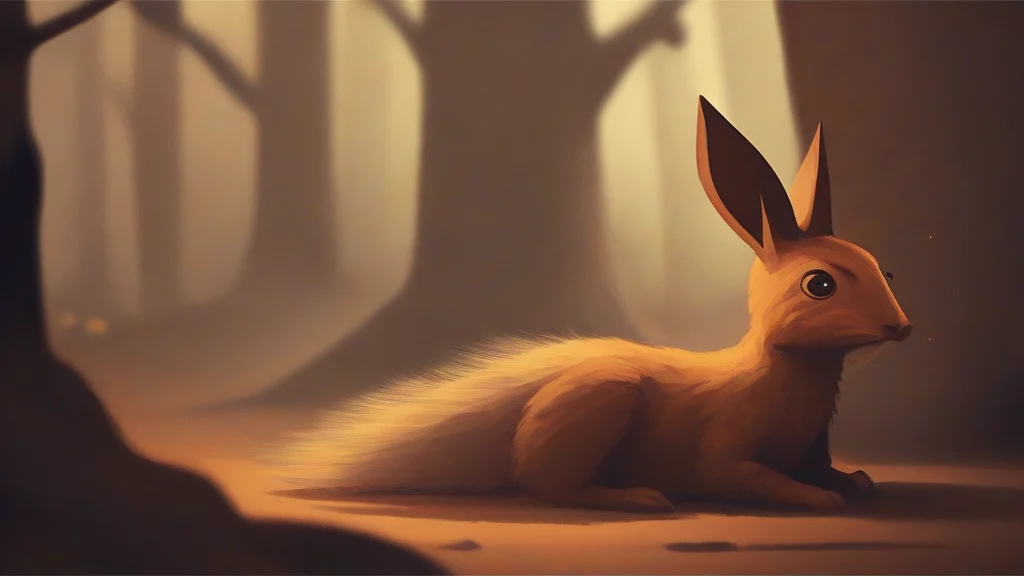
What does critter mean?
A critter is an animal — usually a small, wild, or unfamiliar one — referred to in an informal, affectionate, or folksy way. The word is a casual American alteration of "creature," shaped by regional pronunciation, and it is deeply rooted in rural, Southern, and Western speech patterns. People use it when talking about squirrels raiding bird feeders, raccoons tipping over trash cans, or any small beast whose identity matters less than its presence: "some kind of critter got into the garage last night." Unlike the neutral, scientific "animal" or "creature," critter carries warmth and personality, often suggesting mild exasperation or endearment rather than precision. It appears frequently in children's books, country idioms, pest-control advertising, and place names, giving it a distinctly homespun flavor. Though informal and best avoided in academic writing, critter remains a beloved and widely understood word that instantly signals a relaxed, down-to-earth speaker.
nounAn informal term for a living creature, especially an animal, used affectionately or colloquially.
- A creature or animal, typically small or wild, referred to informally and often affectionately.
"The kids spent the afternoon catching little critters in the creek."
"We spotted a shy critter darting across the trail at dusk."
"Grandpa always claimed the only good varmint was a critter that stayed out of his garden."
The plural follows the regular English pattern of adding -s; "critters" is common in informal speech, e.g., when referring to several animals collectively.
"The barn was full of critters — mice in the walls and birds in the rafters."
Critter is just a folksy American twist on "creature," born from the same Latin root that gives us "creator."
Reviewed by Deb Chak, Editor. AI-assisted content curated by RJS Tech Solutions LLP.
Etymology of critter
Critter arose as an eye-dialect and phonetic rendering of "creature," reflecting how the word was actually spoken in rural American English, with the middle vowel reduced to a short i-sound. It emerged in the United States, most likely in the nineteenth century, as part of a broader pattern of colloquialized forms of standard words. Its ultimate root traces back to Latin "creatura," meaning "a created thing," which also gave English "create" and "creation." As such, critter shares deep ancestry with words like "creature" and "creative," even though it developed as a distinctly American folk form.
How critter is actually used
Informal register; strongly associated with rural, Southern, and Western American speech. Often carries a warm, folksy, or humorous tone rather than a scientific one. Common in everyday conversation and in brand names, but avoided in formal writing.
Easily confused with critter
"Creature" is the standard, neutral English word for any living being, whereas "critter" is an informal, folksy American variant of it.