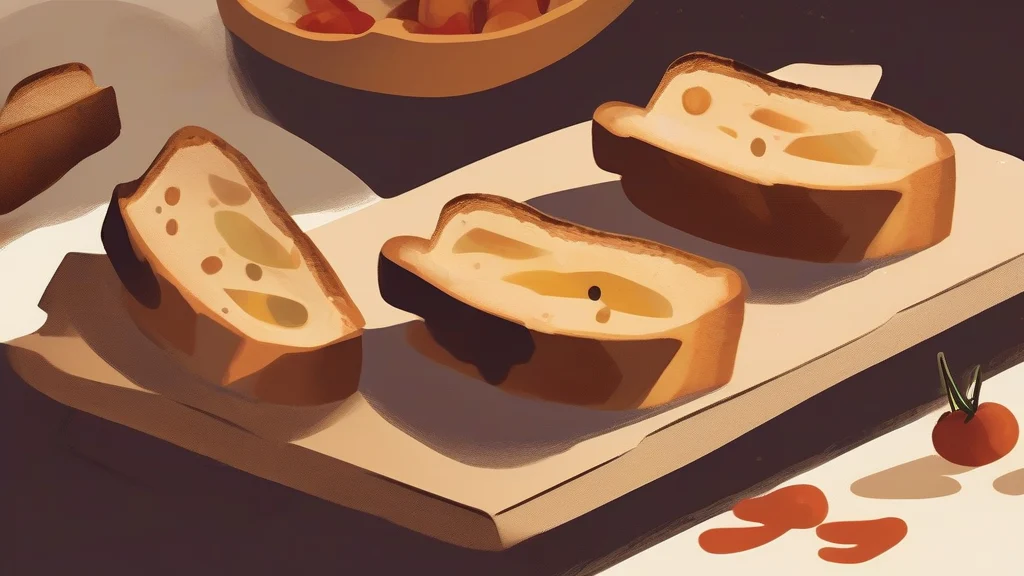
What does crostini mean?
Crostini are small slices of bread—usually from a narrow baguette—that are brushed with olive oil, toasted or grilled until crisp, and served topped with savoury accompaniments such as pâtés, cheeses, cured meats, tapenades, or seasonal vegetables. Borrowed directly from Italian, where the word is the plural of 'crostino' meaning 'little crust', the term entered English through the language of cookery and is now firmly established on restaurant menus and in food writing across the English-speaking world. Crostini occupy a similar niche to bruschetta but are distinguished by their smaller size and finer texture, making them well suited to cocktail parties and formal appetizer courses. The word evokes conviviality and Mediterranean elegance: a platter of crostini suggests thoughtful, handcrafted hospitality. Because it is always encountered in its plural form in practical use, speakers treat 'crostini' as a collective noun for a serving of these bite-size toasts.
nounSmall slices of bread, typically baguette, that are toasted or grilled and served as a base for toppings such as pâté, cheese, tomatoes, or tapenade.
- Small toasted or grilled bread slices served with savory toppings as an appetizer or hors d'oeuvre.
"The waiter set down a platter of crostini topped with whipped ricotta and honey."
"She arranged the crostini on a slate board beside bowls of olive tapenade and goat cheese."
"For the dinner party, he made crostini with fig jam and prosciutto as a starter."
Crostini is itself the plural form (of Italian 'crostino') and does not change in English; it is not further inflected, so phrases like 'two crostinis' should be avoided.
"The caterers prepared three trays of crostini for the reception."
In Italy, 'crostini' literally means 'little crusts' — the word is plural because Italians never serve just one.
Reviewed by Deb Chak, Editor. AI-assisted content curated by RJS Tech Solutions LLP.
Etymology of crostini
Crostini comes from Italian, where it is the plural of 'crostino', a diminutive formed from 'crosta', meaning crust, ultimately derived from the Latin 'crusta', which denoted a hard outer shell or rind. The same Latin root underlies English words such as 'crust', 'crouton', and 'crustacean'. The term travelled into English through Italian cuisine, becoming widespread in anglophone food writing during the late twentieth century as interest in Mediterranean cooking grew.
Related word forms
How crostini is actually used
Always treated as plural in English usage; the singular 'crostino' is rarely used outside Italian contexts. The word carries a connotation of elegant, Mediterranean-style entertaining and appears chiefly in culinary writing, restaurant menus, and food media rather than everyday conversation.
Easily confused with crostini
Bruschetta is larger, rustic garlic-rubbed grilled bread typically topped with chopped tomato, whereas crostini are small, thin slices of toasted bread used as a base for varied toppings.
Croutons are small seasoned cubes of bread usually added to salads or soups, while crostini are flat sliced toasts meant to carry toppings as an appetizer.