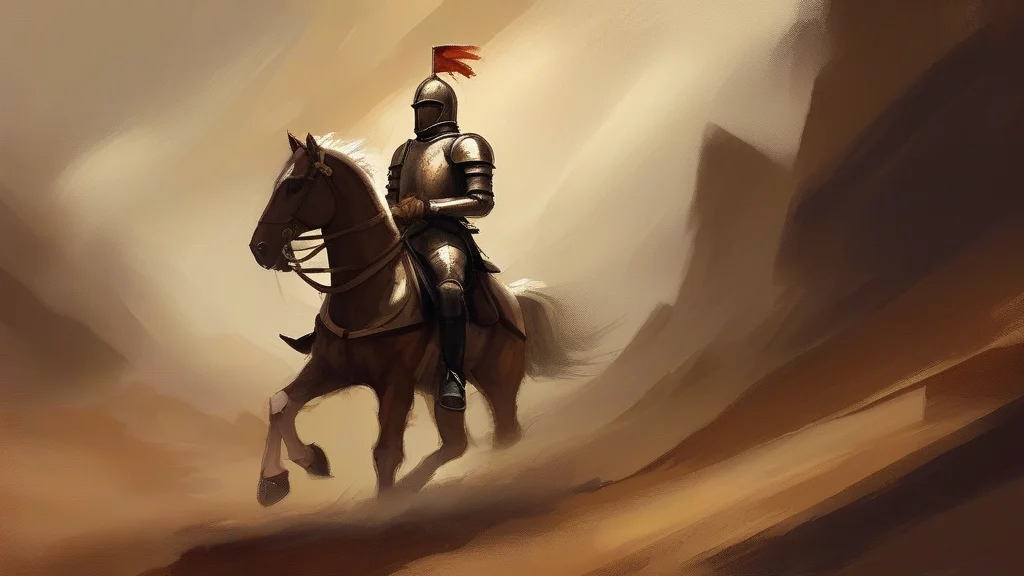
What does cuirassier mean?
A cuirassier is a cavalry soldier who wears a cuirass — a rigid plate of armor covering the chest and back. The term is chiefly historical, evoking the heavy armored horsemen of sixteenth- through nineteenth-century European armies, above all the French and Prussian cuirassier regiments whose thundering charges became iconic images of the Napoleonic Wars. Clad in gleaming breastplates and often helmets, cuirassiers were shock troops intended to break enemy infantry formations with the weight of their charge. As firearms improved, full body armor lost its practical value, yet the name endured: several armies, including France's and Germany's, maintained cuirassier regiments as elite or ceremonial units well into the twentieth century. Today the word appears mainly in military history, museums, and historical fiction, carrying connotations of pageantry, discipline, and the twilight of the age of armored horsemen.
nounA cavalry soldier equipped with a cuirass, a piece of armor protecting the chest and back.
- A cavalry soldier wearing a cuirass (breast- and back-plate), especially one of the heavy armored cavalry regiments of Europe from the 16th to early 20th centuries.
"The French cuirassiers charged in close formation across the field at Waterloo."
"At Waterloo, Ney's massed cuirassiers hurled themselves again and again against the British infantry squares."
"The museum's gallery displays the polished breastplate of a Napoleonic-era cuirassier, dented by a musket ball."
Regular plural; typically refers to members of such regiments collectively.
"Two squadrons of cuirassiers advanced along the road toward the village."
Cuirassiers were the last soldiers on European battlefields still charging into gunfire clad head-to-toe in steel — some regiments wore the breastplate into World War I.
Reviewed by Deb Chak, Editor. AI-assisted content curated by RJS Tech Solutions LLP.
Etymology of cuirassier
The word comes from French 'cuirassier', derived from 'cuirasse' (a cuirass), which in turn traces back to Latin 'coriaceus', made of leather, from 'corium' (hide or leather) — reflecting that early versions of this body armor were made of hardened leather before steel became standard. English adopted the term in the late sixteenth century, during the period when armored heavy cavalry remained a fixture of European warfare.
How cuirassier is actually used
Primarily used in historical and military-history contexts referring to European heavy cavalry, most famously French and German regiments of the Napoleonic era; several European armies retain ceremonial cuirassier units today.
Easily confused with cuirassier
A cuirass is the piece of armor itself (a breastplate and backplate), while a cuirassier is the mounted soldier who wears it.
A carabinier was an armed cavalry or infantry soldier armed with a carbine, whereas a cuirassier is defined by wearing the cuirass armor rather than by his weapon.