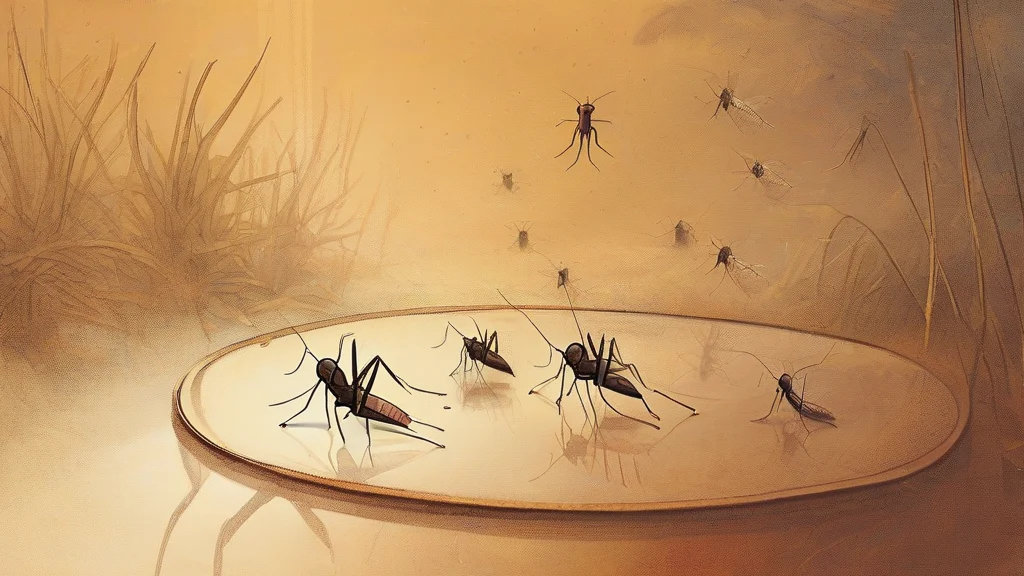
What does culex mean?
Culex is a large and medically significant genus of mosquitoes belonging to the family Culicidae, comprising hundreds of species found across temperate and tropical regions worldwide. Unlike some flashier relatives, culex mosquitoes are typically plain brownish insects that feed predominantly at dusk and at night. Their importance lies chiefly in public health: species such as Culex pipiens and Culex quinquefasciatus serve as principal vectors for West Nile virus, lymphatic filariasis, Japanese encephalitis, and St. Louis encephalitis. Because these mosquitoes breed readily in stagnant water — from storm drains to discarded containers — surveillance programs routinely monitor culex populations to predict disease outbreaks. The word itself derives from Latin, in which culex meant simply a gnat or midge, reflecting how long humans have endured these persistent biters. Today the term remains firmly scientific rather than everyday vocabulary, appearing in entomology papers, health advisories, and news coverage of mosquito-borne illness.
nounA genus of mosquitoes that includes several species which transmit diseases to humans, most notably West Nile virus, filariasis, and various encephalitides; also, in classical Latin, a gnat or midge.
- A genus of mosquitoes (family Culicidae) containing numerous species worldwide, many of which act as vectors for human and animal diseases such as West Nile virus, lymphatic filariasis, and Japanese encephalitis.
"Public health officials identified Culex pipiens as the primary vector of the West Nile outbreak."
"The wet spring created ideal breeding conditions for Culex populations throughout the county."
"Entomologists trap thousands of cules each summer to monitor for arboviral activity."
As a Latin third-declension noun, the classical plural is 'culices' (pronounced /ˈkjuː.lɪ.siːz/), favored in zoological writing; the anglicized plural 'cules' is also encountered in less formal contexts.
"Researchers collected dozens of culices from the traps overnight."
The harmless-sounding word 'culex' hides one of medicine's most notorious villains — this single genus of mosquito has spread West Nile virus across entire continents.
Reviewed by Deb Chak, Editor. AI-assisted content curated by RJS Tech Solutions LLP.
Etymology of culex
The word culex comes directly from Latin, where it denoted a gnat or midge — a small biting insect. Linnaeus adopted the classical Latin name when establishing modern mosquito taxonomy in the eighteenth century, and it has remained the formal generic name ever since. Related terms include the adjective 'culiciform' (mosquito-like in shape) and 'Culicidae', the family name encompassing all mosquitoes, both built on the same Latin root. English borrowed the word as a learned scientific borrowing rather than through popular vernacular use.
How culex is actually used
Used almost exclusively in scientific, medical, and entomological contexts, where it is conventionally capitalized as Culex when referring to the formal taxonomic genus. In general prose, 'mosquito' is far more common; 'culex' appears mainly in public-health reports and technical literature.
Easily confused with culex
Aedes is a different mosquito genus, typically distinguished by its black-and-white striped body and preference for daytime biting, whereas Culex species are generally duller in coloration and bite at night.