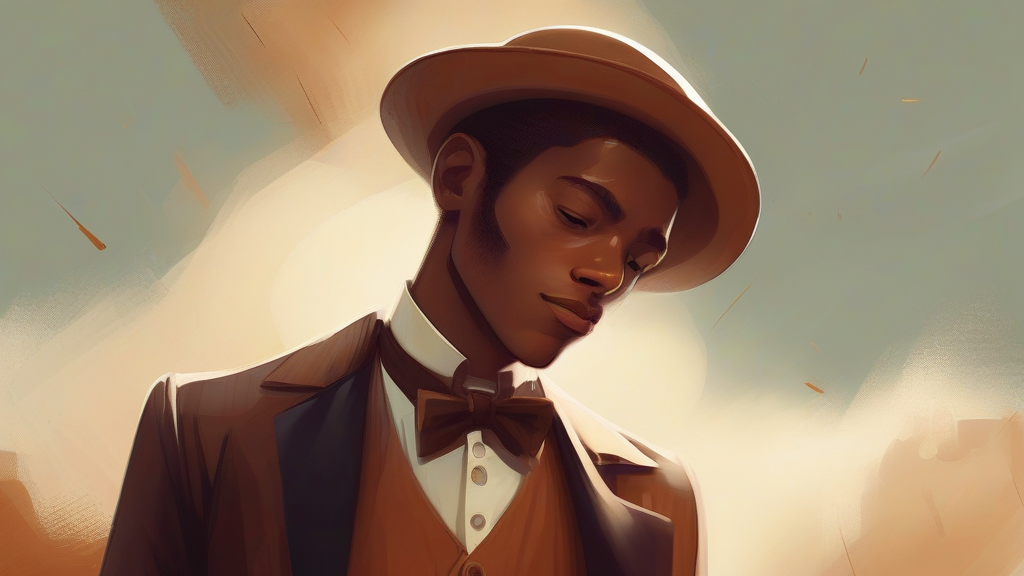
What does dandy mean?
A dandy is a man who devotes unusual care and attention to his appearance, dress, and manner, treating personal style almost as an art form. The term emerged in late eighteenth- and early nineteenth-century Britain, an era whose archetypal dandies, such as Beau Brummell, elevated impeccable tailoring and wit into social currency. While the classic dandy has largely passed out of everyday life, the word survives both as a historical and literary label and as a playful description of any sharply dressed man. In informal American English, 'dandy' also works as an adjective meaning excellent or satisfactory, most often in the phrase 'fine and dandy,' sometimes with an ironic edge. Related forms such as 'dandyish' and 'dandyism' extend its reach, and 'dandyism' in particular names the broader cultural attitude of refined self-presentation associated with figures like Baudelaire and Oscar Wilde.
A man who is excessively concerned about his clothes and appearance; a fop.
"The novel's hero began his career as a penniless dandy about town."
Often applied to Regency-era figures such as Beau Brummell; today usually humorous or historical.
(Informal) Excellent, fine, or first-rate.
"The engine started on the first try, so everything was dandy."
Chiefly American and informal; frequently used ironically.
(Historical) A small four-wheeled carriage, or in dialect use, a handcart or wheeled trolley.
"The miners loaded coal onto a dandy to haul it out of the pit."
Now largely obsolete or regional.
Standard plural for the noun senses; the y changes to -ies.
"The London clubs were full of young dandies showing off their latest waistcoats."
The word 'dandy' gave us 'dandyism' — and its most famous practitioner, Beau Brummell, once claimed it took him five hours to get dressed properly.
Reviewed by Deb Chak, Editor. AI-assisted content curated by RJS Tech Solutions LLP.
Etymology of dandy
The word 'dandy' appeared in British English in the latter half of the eighteenth century, originally as slang, possibly as a shortened form of 'jack-a-dandy,' an earlier term for a vainly dressed man. Its precise deeper origins are unknown. It became especially prominent during the Regency era to describe fashionable men such as Beau Brummell, and it later yielded derivatives including 'dandyish' and 'dandyism.'
Related word forms
How dandy is actually used
As a noun, 'dandy' carries a slightly old-fashioned or historical flavor today, often used affectionately or ironically rather than as a serious label. The adjectival sense ('everything's dandy') is informal and chiefly American, frequently ironic when describing something that is clearly not going well.
Easily confused with dandy
A 'dandy roll' is a cylinder used in papermaking to imprint a watermark, unrelated to the fashion-conscious meaning of 'dandy'.