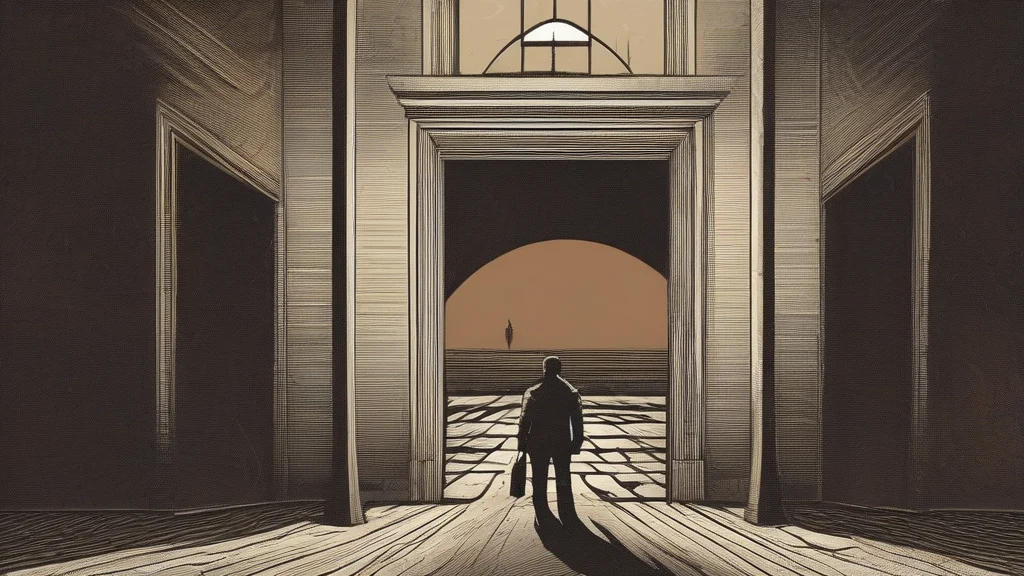
What does darkness mean?
Darkness is the condition of having little or no light — the blackness of a moonless night, an unlit cellar, or a room after a power cut. Beyond this literal sense, English uses the word extensively in figurative ways: darkness can signify evil or moral corruption, as in the "forces of darkness"; ignorance or lack of enlightenment, echoing phrases like the "Dark Ages"; emotional despair or depression, as in "a period of personal darkness"; and secrecy or concealment, as in deeds done "in darkness." These metaphorical senses are deeply embedded in literature and religion, where light and darkness form one of the most enduring symbolic contrasts. Grammatically, darkness is an uncountable noun, though a rare plural, "darknesses," appears in philosophical writing to denote distinct kinds or episodes of darkness. The word derives from Old English "deorcnes," built on the adjective "deorc" (dark). Its versatility, evocativeness, and rich symbolic history make it one of English's most powerful and frequently used nouns.
nounThe state or quality of being without light; the absence of light. Also used figuratively to mean evil, ignorance, despair, secrecy, or moral corruption.
- The complete or partial absence of light; a dark place or condition.
- Figurative: wickedness, evil, or moral corruption.
- Figurative: ignorance, lack of knowledge, or lack of enlightenment.
- Figurative: unhappiness, despair, or emotional gloom.
- Figurative: secrecy, concealment, or obscurity.
"The room was plunged into total darkness when the power failed."
"She fumbled for the light switch, unable to see anything in the thick darkness."
"Historians describe that era as a period of intellectual darkness, when learning was largely confined to monasteries."
Rarely used; found mainly in literary, theological, or philosophical writing to refer to multiple kinds or episodes of darkness.
"The novel explores the various darknesses of the human heart."
"Darkness" is formed from an Old English root so ancient that its relatives survive in Germanic languages from Iceland to Germany — and in literature, it has stood for evil since at least Milton's time.
Reviewed by Deb Chak, Editor. AI-assisted content curated by RJS Tech Solutions LLP.
Etymology of darkness
Darkness comes from Old English "deorcnes," meaning want of light, formed by adding the noun-forming suffix "-ness" to the adjective "deorc" (dark), which is related to words in other Germanic languages such as Old High German "tarchanjan" (to hide). The modern spelling with "-ar-" reflects later sound changes in Middle English. The adjective "dark" itself is of uncertain deeper origin, possibly connected to a Proto-Germanic root meaning hidden or murky.
Related word forms
How darkness is actually used
"Darkness" is standard register, suitable for both everyday speech and formal writing. It carries strong literary and symbolic connotations — often negative (evil, despair, ignorance) but sometimes neutral or even comforting (rest, sleep). The plural "darknesses" exists but is rare, appearing mostly in philosophical or literary contexts.
Easily confused with darkness
"Darkness" is the noun naming the abstract state of being without light, while "the dark" is a common informal phrase referring to dark places or conditions (e.g., fear of the dark); they overlap but "darkness" is more formal and figurative.