What does debarked mean?
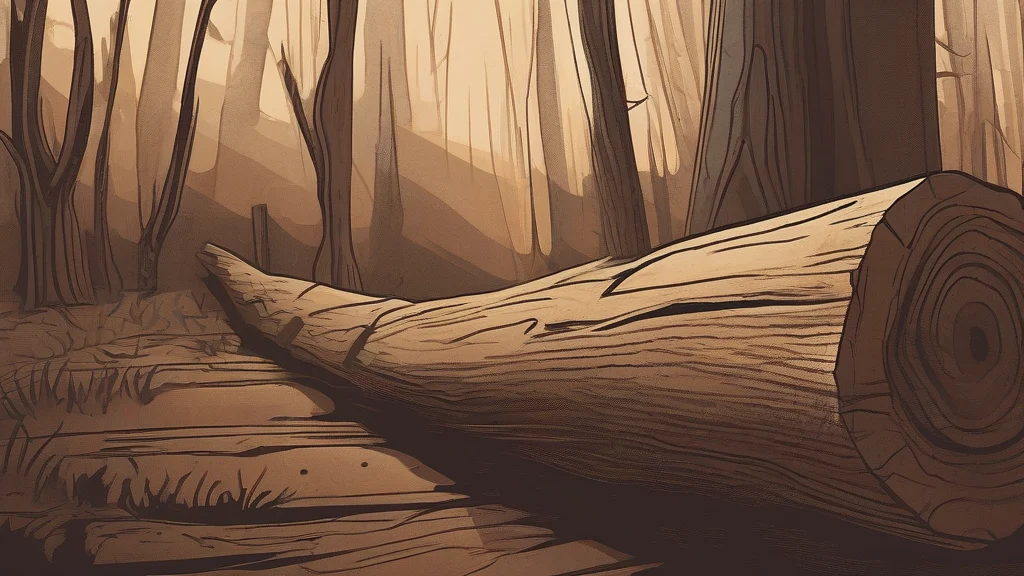
"Debarked" is the past tense and past participle of the verb "debark", which carries two distinct meanings depending on context. Its older and most widespread sense belongs to the timber trade: a log that has been debarked has had its outer bark stripped away, usually by machine or by hand, before sawing or processing. The word also serves as the past form of a second verb "debark", meaning to leave a ship, aircraft, or other vehicle — essentially a synonym for "disembark" that is heard most often in North American, naval, and military contexts. The two senses arise from different etymological paths: the timber sense derives from bark (the covering of a tree), while the travel sense comes from French débarquer, built on barque, meaning ship. Because both verbs share identical forms, context is usually enough to make the intended meaning clear — one rarely confuses felled trees with arriving passengers. Writers in formal registers may prefer "disembarked" to avoid ambiguity altogether.
verbPast tense and past participle of "debark". In its primary sense, it means having had the bark stripped from a log or piece of timber; in a second, chiefly North American sense, it means to have disembarked from a ship, aircraft, or other vehicle.
- (of timber) Having had its bark removed.
- (chiefly North American) Having disembarked from a ship, aircraft, or other vehicle.
"The debarked logs were stacked neatly at the sawmill, ready for milling."
"By morning the crew had debarked every log in the holding pond."
"The soldiers debarked at dawn under cover of fog."
Reviewed by Deb Chak, Editor. AI-assisted content curated by RJS Tech Solutions LLP.
Etymology of debarked
The word traces to two separate sources. The timber sense combines the prefix de- with bark, the noun for a tree's outer covering, producing a straightforward descriptive verb. The travel sense descends from French débarquer, formed from de- plus barque (a small ship), which itself came via Spanish barra or Latin barca, ultimately of uncertain origin. Both verbs entered English around the early modern period, and their past-tense forms coincide exactly as "debarked".
Related word forms
How debarked is actually used
The timber sense is standard in forestry and wood-processing industries worldwide. The disembarking sense is more common in North American usage and formal or military contexts; British English typically prefers "disembark" for that meaning.
Easily confused with debarked
"Embarked" means to have boarded or gone aboard a vessel or aircraft, while "debarked" means to have come ashore or left it.
"Departed" means simply to have left a place by any means of travel, whereas "debarked" specifically refers to leaving a ship or aircraft after a voyage.