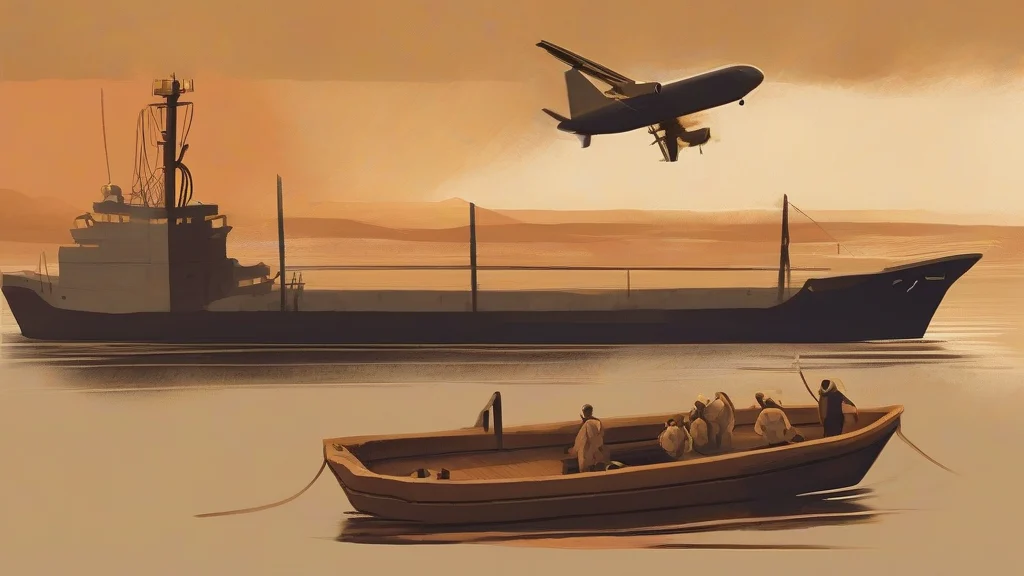
What does embarked mean?
"Embarked" is the past tense and past participle of the verb "embark," which has two closely related uses. Literally, it means to have gone aboard a ship, aircraft, train, or other vehicle in order to begin a journey, as when passengers embarked at a port before an ocean crossing. Figuratively — and very commonly — it means to have begun or set out on some new venture, career, project, or phase of life, as in "he embarked on a new chapter." In this extended sense it is nearly always paired with the preposition "on" or "upon." The word carries connotations of purposeful beginnings and forward movement, giving it a mildly formal, even aspirational tone that makes it popular in journalism, biography, and business writing. Derived through French "embarquer" from roots meaning "in" and "boat," it is a natural choice whenever a journey or undertaking deserves a note of ceremony.
Having boarded a ship, aircraft, or other vehicle in order to begin a journey.
"The troops embarked at dawn under cover of fog."
Literal usage is standard in maritime and aviation contexts.
Having begun or set out on a new venture, project, or course of action, typically followed by 'on' or 'upon'.
"She embarked on a demanding course of graduate study."
Every cruise ship announcement you've ever heard ends with a form of this word — it comes from French 'embarquer' and literally means 'to go into a boat.'
Reviewed by Deb Chak, Editor. AI-assisted content curated by RJS Tech Solutions LLP.
Etymology of embarked
"Embarked" derives from the verb "embark," which entered English in the late sixteenth or early seventeenth century from French "embarquer." The French word combines "em-" (a form of Latin "in-") with "barque," meaning boat or small ship, which itself traces back through Late Latin "barca." The literal nautical sense came first; the figurative sense of beginning an undertaking developed later and is now the more frequent usage. Cognates appear across Romance languages, including Spanish "embarcar" and Italian "imbarcare."
Related word forms
How embarked is actually used
Formal to neutral in register. In the literal travel sense it is common in shipping and aviation contexts. The figurative sense is almost always followed by the preposition 'on' or the slightly more formal 'upon' (e.g. 'embarked on/upon a project').
Easily confused with embarked
'Disembarked' means the opposite — leaving a ship or vehicle rather than boarding it.