What does decrepitating mean?
Decrepitating is the present participle of "decrepitate," a technical verb meaning to crackle and split apart into small fragments when heated, or to subject a substance to such treatment. It is used chiefly in chemistry and mineralogy, where certain crystalline substances — common salt among them — are known to decrepitate violently, throwing off tiny shards with an audible popping or snapping. The word can also describe any series of small crackling sounds, though this broader use is rare. Derived from the Latin crepare, meaning to rattle or crack, it shares an origin with "decrepit," which originally described things broken down with age. Because of its narrow scientific scope, decrepitating appears almost exclusively in laboratory manuals, metallurgical texts, and descriptions of mineral behavior under heat, making it a precise but uncommon term in general vocabulary.
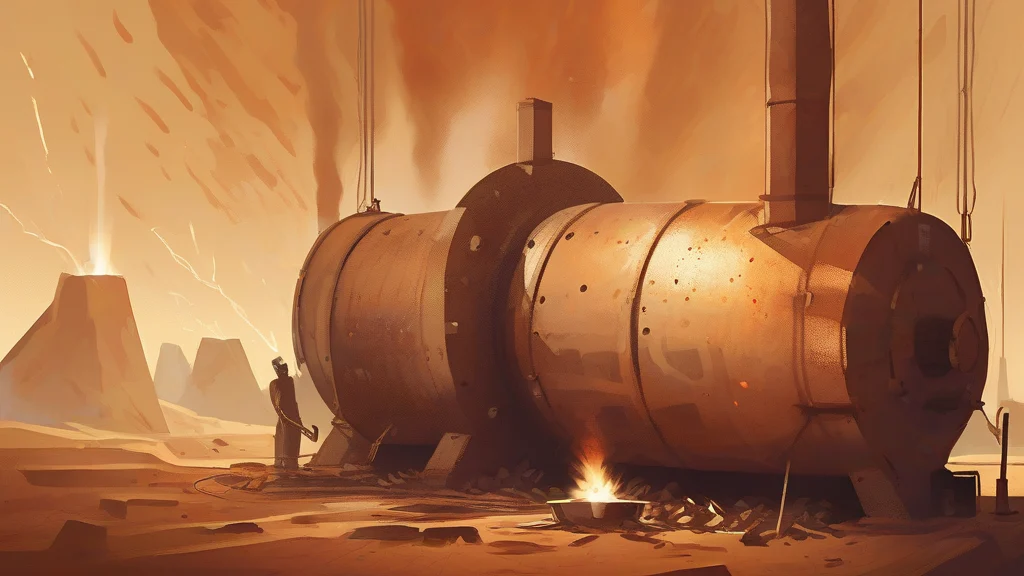
verb (present participle)Making a sharp crackling sound, or roasting a substance (especially a mineral) until it cracks and splits with a series of little explosions. Used chiefly in chemistry and metallurgy.
- (of a substance, especially a mineral) To crackle and burst apart into small fragments when heated.
- (of a sound) To make a series of small crackling noises.
"The salt decrepitated violently in the flame, spitting tiny fragments across the bench."
"The ore decrepitated so fiercely in the furnace that fragments flew several feet."
"As the fire settled, the damp logs went on decrepitating for another hour."
Before X-rays and spectroscopes, chemists identified minerals partly by how spectacularly they crackled when thrown on hot coals — decrepitation was literally the sound of discovery.
Reviewed by Deb Chak, Editor. AI-assisted content curated by RJS Tech Solutions LLP.
Etymology of decrepitating
Decrepitating comes from the Latin verb decrepitare, formed from de- plus crepare, meaning to rattle, creak, or crackle. It entered English as a scientific term in the early modern period, when chemists observed that certain minerals crackled and burst when heated. The same root gives us "decrepit" and "decrepitude" — originally describing things broken apart by age — as well as "crepitate" and "crepitus."
Related word forms
How decrepitating is actually used
A technical, formal word used almost exclusively in chemistry, mineralogy, and metallurgy. The noun form "decrepitation" is more common than the verb in scientific literature. Rarely encountered outside specialist contexts.
Easily confused with decrepitating
"Deprecating" means expressing disapproval of something, whereas "decrepitating" refers to crackling or bursting apart, as when minerals are roasted.
"Decrepit" describes something worn out or broken down from age, while "decrepitating" describes the physical act of crackling or splitting apart.